Should I Pay for a Pre-Listing Inspection Before Selling in Phoenix?
Thinking about selling your Phoenix home? Here's what a pre-listing inspection actually does — and how to decide if the cost makes sense for your situation.
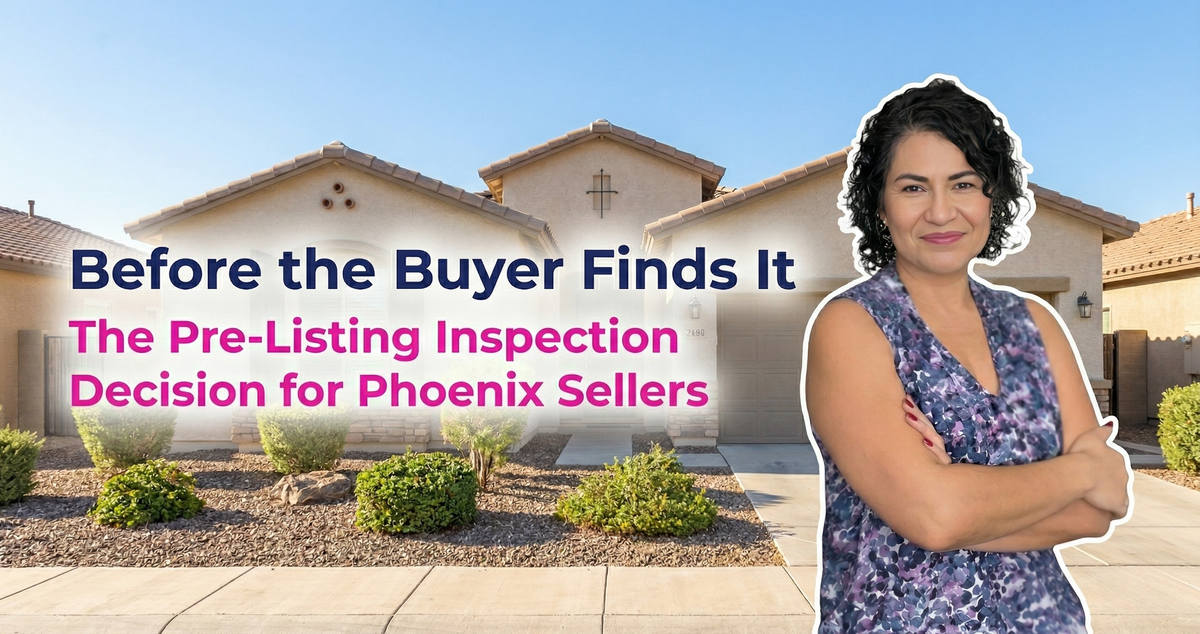
Should I pay for a pre-listing inspection before selling my home in Phoenix?
A pre-listing inspection is optional in Arizona, but for many sellers in the Phoenix metro area it can reduce surprises during the buyer's 10-day inspection period, give you more control over repairs and pricing, and support a smoother path to closing. Whether it's worth the cost depends on your home's age, condition, and how you want to approach negotiations.
What's Really at Stake During the Buyer's Inspection Period
If you've never sold a home before — or it's been years since you last did — the inspection period can feel like the most stressful part of the process. Under the Arizona Association of Realtors (AAR) purchase contract, the buyer has 10 days to conduct inspections and decide how they want to proceed. During that window, they can ask for repairs, request a price reduction, or walk away entirely.
What catches most sellers off guard is that they don't find out what's on the inspection report until after the buyer has already read it — and formed an opinion. By then, the dynamic has shifted. The buyer's agent is drafting a repair request, the buyer is emotionally recalibrating, and you're suddenly reacting instead of leading.
A pre-listing inspection flips that script. You get the report first. You see what a buyer would see. And you get to decide what to do with that information before anyone else is in the room. According to the National Association of REALTORS®, home inspection issues caused a significant share of delayed contracts and terminations in recent years — something proactive sellers in Phoenix can work to avoid.
What a Pre-Listing Inspection Actually Covers
A standard pre-listing inspection in the Phoenix metro follows the same scope as a buyer's inspection — a licensed inspector walks the property and evaluates the visible and accessible components of the home. That typically includes the roof, HVAC system, plumbing, electrical, foundation, windows, and any safety concerns.
In Phoenix, a few categories come up more often than in other markets. Roof condition is a common flag — especially on homes over 15 years old where tile work or flashing may have deteriorated. HVAC systems get scrutinized closely because of how hard they run here. And water intrusion or efflorescence around block walls, common in older West Valley builds, can look more alarming on paper than it actually is in person.
When you have the report ahead of time, you can contextualize these things. You can get contractor estimates, make targeted repairs, or simply price the home to reflect known conditions — all before you're sitting across from a buyer who is using the report as leverage. If you're looking for more guidance on selling in the West Valley, you can browse more West Valley home selling guides on the blog.
— Ankita C, Gilbert, AZ
The Connection to Arizona's SPDS — What Sellers Often Miss
Here's where pre-listing inspections intersect with something sellers in Arizona are already required to do: the Seller's Property Disclosure Statement, or SPDS. The SPDS guides you through what needs to be disclosed to the buyer. Most of the questions are framed as "are you aware" — meaning you're disclosing based on your knowledge, not on a professional inspection of the home.
This is where sellers sometimes feel exposed. If you complete a pre-listing inspection and the report surfaces something — a cracked heat exchanger, failed caulking around a tub, signs of past termite activity — you are now aware of it. That awareness carries disclosure obligations. Under Arizona law (ARS 32-2156), sellers are required to disclose known material facts about the property, and the SPDS is the structured tool most agents use to fulfill that obligation.
This is usually where I slow sellers down and help them think through the decision carefully. Getting inspected isn't automatically the right move for every home or every situation. It depends on how old the home is, how confident you are in its condition, and how you want to position yourself in negotiations. There's no single right answer — but there's a right answer for your specific home, and that's what we work through together.
When a Pre-Listing Inspection Makes the Most Sense
Not every Phoenix seller needs one. But there are situations where the information you'd gain is genuinely worth the investment — typically $300–$500 depending on the home's size and the inspector you hire.
It tends to make the most sense when your home is older than 15–20 years and you haven't had any recent professional evaluations of major systems; when you've already received feedback from showings that buyers are hesitant; when you're in a price range or neighborhood where buyers are requesting concessions or coming in with detailed repair requests; or when you're emotionally invested enough in the outcome that a surprise during escrow would be difficult to absorb. In the West Valley, homes in Peoria, Glendale, and parts of Phoenix that were built in the 1990s and early 2000s tend to generate the most inspection activity — the homes are at an age where things are due for attention but haven't necessarily failed yet.
It makes less sense for newer builds, recently renovated homes, or situations where you've already addressed the systems most likely to raise flags. The NAR Consumer Guide on Home Inspections confirms that sellers who choose to pre-inspect often gain more control over condition-related decisions before negotiations begin.
How Pre-Listing Inspection Results Affect Your Pricing and Negotiation Position
At this stage, I help clients narrow their focus to the decision that actually matters: not whether to fix everything the inspection found, but which items to address before listing and which to price into the home.
There are roughly three approaches sellers take after a pre-listing inspection. The first is to repair the flagged items, which typically supports full listing price and reduces the chance of a buyer's inspection triggering renegotiation. The second is to disclose the findings without making repairs and price accordingly — buyers who understand the condition still transact, often without surprises that derail the deal. The third is a combination: address the safety or functional items and disclose the cosmetic or lower-priority findings, which tends to produce the strongest negotiating position without requiring full renovation spend.
What doesn't work well is getting an inspection, not disclosing what it found, and hoping the buyer's inspector misses it. Arizona's SPDS obligations follow your awareness — and a transaction that unravels in escrow is far more expensive than the cost of transparency.
— Michael R, Avondale, AZ
What to Do If the Inspection Finds Something Major
Most pre-listing inspections don't uncover catastrophic surprises. But occasionally they do — and it's worth knowing how that situation plays out in Arizona before you're in it.
If a pre-listing inspection reveals something significant, like a failing roof, a major HVAC issue, or foundation concerns, you have options. You can get a contractor to address it before listing. You can get a repair estimate and either reduce your asking price to reflect it or offer a seller concession at closing. What the AAR contract structure means for you practically is that buyers coming in during the 10-day inspection window will have their own inspector, and anything that shows up on their report will become part of the negotiation. Getting ahead of that, with clear documentation and a transparent pricing strategy, puts you in a far stronger position than reacting after an offer is on the table.
Your title company handles the closing mechanics in Arizona — not an attorney — but the decisions you make about condition and pricing before you list are what drive how smoothly that closing actually goes. The Arizona Department of Real Estate's buyer and seller resource page at azre.gov provides additional guidance on disclosure obligations and what Arizona consumers should research before completing a transaction.
Frequently Asked Questions
Does a pre-listing inspection in Phoenix typically cost? Most licensed home inspectors in the Phoenix metro charge between $300 and $600 for a standard single-family home, depending on size. Specialty inspections — sewer scope, pool, roof certification — are add-ons and priced separately.
If I get a pre-listing inspection, am I required to share it with buyers? Arizona requires sellers to complete a Seller's Property Disclosure Statement (SPDS), which is based on what you're aware of. Once you have an inspection report, you are aware of its findings — and those need to be reflected in your SPDS. Sharing the full report isn't automatically required, but disclosure of known material defects is.
Can I negotiate repairs after a buyer's inspection even if I already did a pre-listing inspection? Yes. Under the AAR contract, the buyer has a 10-day inspection period regardless of whether a pre-listing inspection was done. The difference is that if you've already addressed or priced in known items, there's typically less for the buyer's inspector to surface — and less room for renegotiation.
Does a pre-listing inspection guarantee my home will close without issues? No. It reduces surprises and gives you more control over how condition-related issues are handled, but it doesn't eliminate the buyer's right to inspect or negotiate. What it does is shift the dynamic from reactive to proactive.
Is a pre-listing inspection more important in certain Phoenix neighborhoods? Older neighborhoods — parts of Peoria, Glendale, and Phoenix where homes were built in the 1990s — tend to generate more inspection activity. HVAC systems, roofs, and pool equipment on homes in these areas are often at an age where buyers' inspectors look closely.
The Decision That Matters Most
A pre-listing inspection isn't right for every seller or every home. But the sellers who benefit most from the process are the ones who understand that information is leverage — and that getting the report before your buyer does means you're never reacting, you're always deciding.
If your home has age, if you're uncertain about what a buyer's inspector might find, or if you simply want to walk into negotiations with full confidence in what you're selling, a pre-listing inspection is worth the few hundred dollars it costs. The goal is a transaction that closes on your terms — and that kind of outcome starts with knowing what you're working with.
About the Author
Kasandra Chavez is a real estate advisor serving the West Valley of Greater Phoenix, Arizona, recognized among the top 5% of real estate professionals in the Greater Phoenix area. She works with buyers and sellers to build strategy aligned with their lifestyle and goals, guiding clients through high-stakes decisions with clarity rather than pressure. Kasandra's approach centers on managing timelines, preparing clients for every stage of the process, and ensuring transactions close on her clients' terms.
More Helpful Real Estate Videos from Kasandra
Stay confident in your real estate journey with Kasandra’s latest Arizona tips and insights.