
What Paperwork, Disclosures, and Deadlines Are Required to Legally Sell a Glendale Home Today?
A step-by-step guide to the exact paperwork, disclosures, and deadlines required to legally sell a Glendale home today—so long-time owners avoid surprises and liability.
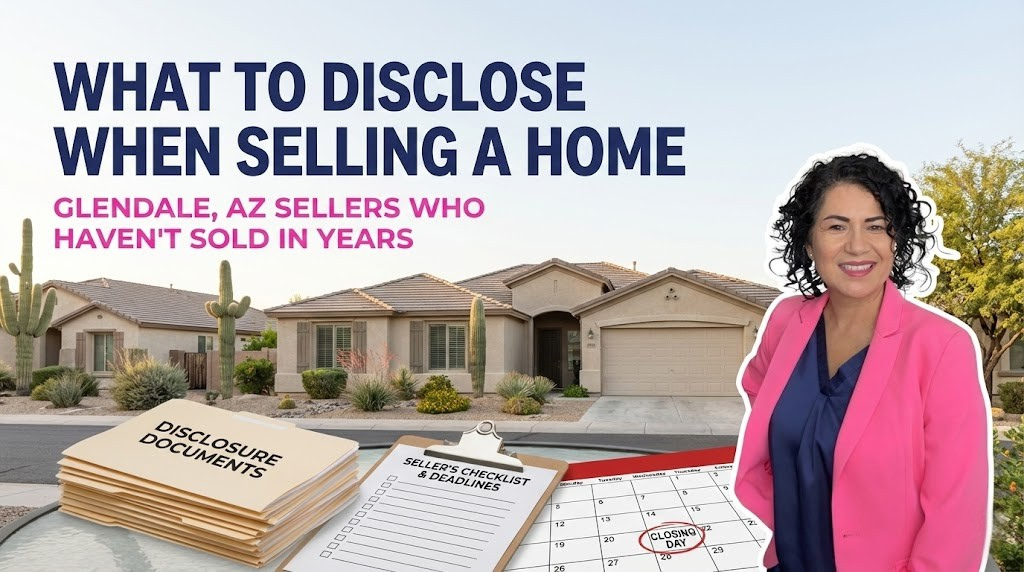
We haven't sold a house in 15+ years—what exact paperwork, disclosures, and deadlines are required to legally sell our Glendale home now so we don't get sued later?
If you're selling a Glendale home today after a long gap, you must complete Arizona-specific disclosure forms, meet contract deadlines, and document repairs and representations accurately. The protection comes from sequencing the paperwork correctly, disclosing what Arizona law requires (no more, no less), and tracking deadlines so nothing material is missed.
Why selling today feels riskier than it did 15 years ago
This is usually where sellers feel the pressure spike. Arizona disclosure expectations are clearer and more enforceable than they were years ago, and buyers are more inspection-driven. In Glendale, where many homes were built across multiple decades, what you disclose—and when—matters.
At this stage, I slow sellers down and separate legal requirements from best practices. The goal isn't to over-disclose or under-disclose; it's to be accurate, timely, and documented.
The core documents Arizona requires before and during escrow
Here's what must be completed to meet state expectations and protect you later.
Seller Disclosure Statement (SPDS)
Arizona requires a Seller Property Disclosure Statement. This is the backbone of your protection because it documents what you know about the property's condition.
I guide sellers to complete the SPDS early, before the home goes active. That timing matters—changes after acceptance can create risk if they appear reactive.
Lead-Based Paint Disclosure (if applicable)
If your Glendale home was built before 1978, federal law requires a lead-based paint disclosure and pamphlet acknowledgment. This is non-negotiable and time-sensitive.
HOA disclosures (if the home is in an association)
If your property is in an HOA, buyers must receive association documents within statutory timeframes. What I watch for here is delay—late delivery can extend buyer cancellation rights.
What sellers often misunderstand about "as-is" in Arizona
"As-is" does not mean "no disclosures." This is where stress tends to show up if expectations aren't clear.
Arizona law still requires disclosure of known material facts—even if you won't make repairs. I help sellers distinguish between:
What must be disclosed
What can be negotiated
What should be documented and left alone
Inspection periods, responses, and deadlines that protect you
Once under contract, deadlines control risk.
Buyer inspection period
Buyers typically have a defined inspection window (10 days in Arizona). During this time, your disclosures and prior documentation are compared against inspection findings.
This is where I help sellers respond factually and calmly. Over-explaining creates confusion; under-responding creates mistrust.
Buyer Notice of Disapproval (BINSR)
If the buyer submits a repair request, Arizona provides a structured response process. Missing this deadline—or responding informally—can weaken your position.
Appraisal and loan timelines
Even though these feel like "buyer issues," missed dates can pull sellers back into renegotiation. I track these so sellers aren't surprised late in escrow.
— Michael R, Avondale, AZ
Repairs, credits, and documentation—what actually matters
If you agree to repairs or credits, documentation becomes your shield.
I advise sellers to:
Keep invoices and receipts
Confirm completion dates in writing
Avoid side agreements outside the contract
This is where process control prevents post-closing disputes.
Title, escrow, and identity verification requirements
Arizona closings rely heavily on escrow coordination. Sellers must provide:
Government-issued ID
Verified payoff information
Signed deed and settlement statements
Wire fraud is a real risk. I ensure sellers verify instructions directly with escrow—never through email alone.
Why deadlines—not paperwork—create most legal exposure
Most lawsuits aren't about a missing form; they're about timing.
Late disclosures, missed response windows, or undocumented changes can reopen negotiations or extend buyer cancellation rights. This is why I calendar every deadline and confirm delivery—not just completion.
— Aniket, Gilbert, AZ
How Arizona law and oversight factor into disclosures
Arizona real estate transactions are governed by state standards enforced by the Arizona Department of Real Estate. While agents guide process, sellers remain responsible for the accuracy of disclosures.
This is why I focus on clarity and documentation—so your file tells a complete, consistent story if questions ever arise.
FAQ: Selling a Glendale home after a long gap
Do we need a lawyer to sell a home in Glendale?
Most Arizona sales are handled through licensed agents and escrow, not attorneys. The key is correct disclosures and deadline management.
Can buyers sue after closing if something breaks?
Post-closing claims usually hinge on whether an issue was known and undisclosed. Accurate SPDS completion is your primary protection.
What if we truly don't know the condition of something?
Arizona allows "unknown" responses when truthful. Guessing or assuming creates more risk than stating uncertainty.
How long do buyers have to cancel after inspections?
Inspection periods are defined in the contract. Missing seller response deadlines can extend buyer rights.
Are disclosures different in Glendale than other AZ cities?
State requirements are consistent, but local housing age and HOAs can change what's relevant to disclose.
Closing perspective: structure reduces risk
Selling after 15+ years isn't about memorizing forms. It's about sequencing decisions, meeting deadlines, and documenting truthfully.
This is where I carry the process weight—so sellers can move forward knowing the transaction was handled cleanly, clearly, and defensibly.
About the Author
Kasandra Chavez is a real estate advisor serving the West Valley of Greater Phoenix, Arizona, recognized among the top 5% of real estate professionals in the Greater Phoenix area. She works with West Valley homeowners and sellers to align strategy with lifestyle and family needs while supporting clear, confident decision-making. Her approach centers on process control and thoughtful market navigation.