
Resale vs. New Build With Builder Incentives in the West Valley
Builder rate buydowns make new homes tempting. Here's how West Valley buyers can compare a resale home against a new build with incentives and choose well.
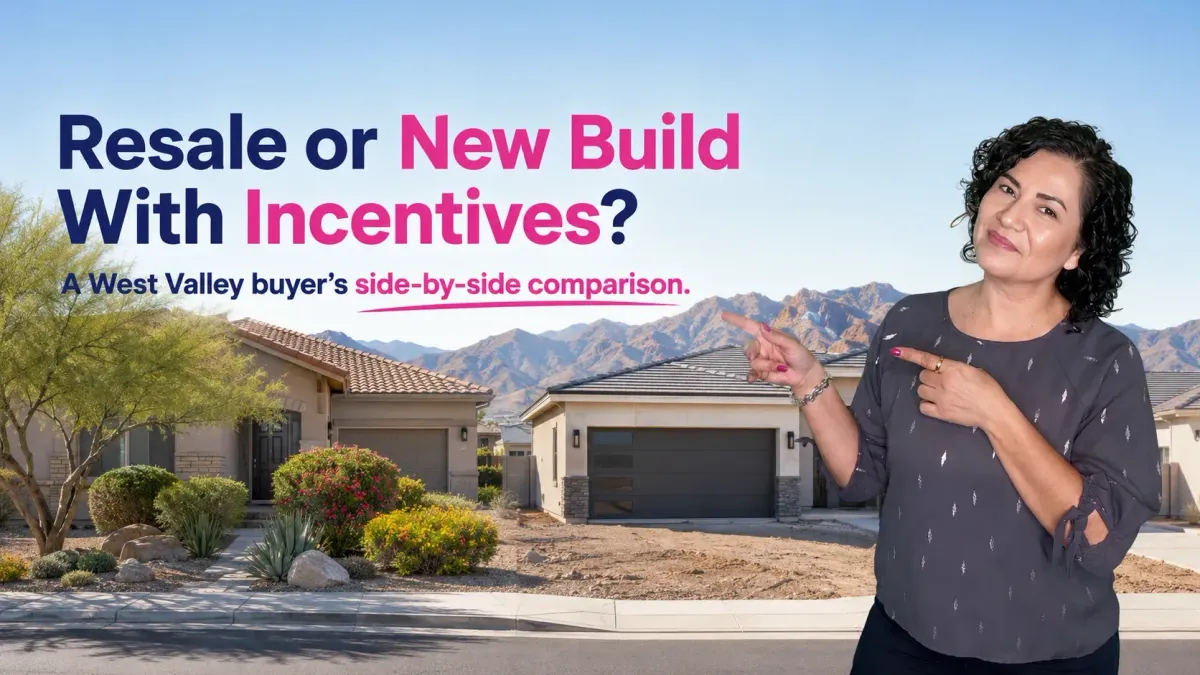
With West Valley builders offering rate buydowns and closing-cost incentives on new homes, how do I actually compare a brand-new build like Teravalis against a resale home in an established community like Verrado or Vistancia and know which is the better buy?
Compare them on total monthly cost and total ownership cost, not sticker price. Builder incentives like rate buydowns and closing-cost credits genuinely lower a new home's early payments, but a resale home in an established community like Verrado in Buckeye or Vistancia in Peoria often wins on location, mature landscaping, existing upgrades, and no lot premiums or long build wait. The right answer depends on your timeline and how you weigh a lower early payment against a settled, move-in-ready home.
Walk into any new-construction sales office in the West Valley right now and you'll hear about incentives before you hear the price — a lower rate for the first couple of years, help with closing costs, maybe a design-center credit. Those offers are real, and they can make a brand-new home look like the obvious deal next to a resale listing down the road. But "which is cheaper" is the wrong question. The right question is which home costs less to actually own over the years you'll live there, once you account for everything. This is usually where I slow buyers down, because the honest comparison takes a few more minutes and saves a lot of regret. Here's the framework we use.
What Builder Incentives Actually Do (and Don't Do)
A rate buydown lowers the interest rate on your loan, which lowers your monthly payment. A closing-cost credit reduces the cash you need at the table. Both are genuinely valuable — but read the fine print. Many buydowns are temporary, stepping the rate down for the first year or two before it climbs back to the standard rate, which means the low payment you're quoted may not be the payment you keep. Incentives are also frequently tied to using the builder's in-house lender, and the base price itself is often held firm.
So the incentive lowers your early cost, not necessarily the home's value or your long-term cost. That doesn't make it a bad deal — it makes it a deal you have to evaluate on the full timeline, not the first-year headline. Compare the payment you'll actually carry after any temporary buydown expires, and compare the total cash and price, not just the promoted monthly number.
Where Resale Homes Tend to Win
An established resale home hands you things a new build makes you wait and pay for. The location is already proven, the landscaping is mature, and the upgrades — flooring, window coverings, a finished backyard, light fixtures — are already in place and already paid for. There's no lot premium layered on top, and there's no six-to-twelve-month build timeline between contract and move-in.
Communities like Verrado in Buckeye and Vistancia in Peoria show this well: established amenities are open and running today, streetscapes are mature, and you can see exactly what you're buying and who your neighbors are. What I watch for here is the "invisible" cost of a new build that a resale home has already absorbed — the thousands buyers spend after closing on blinds, landscaping, and finish upgrades that a resale home simply includes. Our comparison of warranty coverage, inspection issues, and long-term repair costs between a resale home and a new build breaks down where those costs actually land over time.
— Mariah A, Buyer
Where New Builds Tend to Win
New construction has genuine advantages, and incentives are only part of the picture. Everything is new and under builder warranty, so near-term repair costs are typically low. You often get to choose finishes and floor plans, the home is built to current energy-efficiency standards, and there's no previous owner's deferred maintenance to inherit. For some buyers, the incentives plus a fresh start plus customization genuinely outweigh what a resale home offers.
A brand-new master plan like Teravalis in Buckeye is the clearest example of that new-supply appeal — modern homes, current standards, and builder incentives designed to get you in. The point isn't that new is worse; it's that new comes with trade-offs (build timelines, post-close setup costs, and incentives that may be temporary) that belong in the comparison alongside its real strengths. Our step-by-step look at deciding between new construction and a resale home lays those trade-offs side by side.
How to Actually Run the Comparison
Put both homes on the same footing with two numbers. First, total monthly cost: the payment you'll actually carry on the resale home versus the payment on the new build after any temporary buydown expires — not the teaser figure. Second, total ownership cost: for the resale home, add any upgrades you'd want and realistic near-term repairs; for the new build, add lot premiums, design-center choices, post-close landscaping and window coverings, and factor in the warranty that covers early repairs.
Because builder incentives are often lender-tied, review the financing terms as carefully as the price — our guide to comparing builder contracts, incentives, and warranties before you sign shows exactly what to scrutinize. Then layer in timeline: if you need to be in a home in weeks, a resale wins by default; if you can wait and value customization, a new build stays in the running. When both numbers and your timeline point the same direction, you have your answer.
Getting the Geography Right
One trap worth naming: these communities are not interchangeable, and they're not on a single corridor. Verrado sits in central Buckeye near the I-10 and Verrado Way. Teravalis is far-west Buckeye off Sun Valley Parkway. Vistancia is up in north Peoria near Loop 303 and Lake Pleasant Parkway — a different city and a different commute entirely. Location drives value, resale potential, and daily life more than any incentive does, so compare homes that genuinely fit where you need to be, not just communities that sound similar in a builder's brochure. A lower payment in the wrong location is not a better buy.
— S B, Buyer
The Bottom Line
Builder incentives are a real benefit, but they're an early-payment story, not proof that new is the better buy. Compare a West Valley resale home and a new build on the payment you'll actually carry and the total cost to own each over your time horizon — including the upgrades and setup a new home needs after closing and the repairs a resale home may need sooner. Weigh your timeline, get the location right, and the better buy usually makes itself clear. The incentive should inform your decision, not make it for you.
Frequently Asked Questions
Are builder rate buydowns worth it compared to buying a resale home?
They can be, but many buydowns are temporary and lower your rate only for the first year or two. Compare the payment you'll carry after the buydown expires against a resale home's payment, and weigh the incentive against a resale's location and included upgrades.
Do builder incentives lower the price of a new home?
Usually not the base price. Incentives typically reduce your interest rate or closing costs, and they're often tied to the builder's lender. Evaluate the full price and total cash needed, not just the promoted monthly payment.
What hidden costs come with a new build versus a resale home?
New builds often add lot premiums, design-center upgrades, and post-close spending on landscaping and window coverings, plus a build-wait. Resale homes usually include those items but may need some near-term repairs, which a home inspection helps you anticipate.
Is a resale home in Verrado or Vistancia better than a new build?
It depends on your priorities and location needs. Verrado is in Buckeye and Vistancia is in Peoria, so they suit different commutes. Resale generally wins on immediate move-in and included upgrades, while new builds win on warranty and customization.
How do I compare a new build and a resale home fairly?
Use two numbers: the true monthly payment on each after any temporary incentive expires, and the total cost to own each over your time horizon including upgrades and repairs. Then factor in your timeline and the location that fits your life.
About the Author
Kasandra Chavez is a real estate advisor serving the West Valley of Greater Phoenix, Arizona, recognized among the top 5% of real estate professionals in the Greater Phoenix area. She helps buyers compare their options clearly, understand the true cost of each choice, and buy with confidence rather than guesswork. Her focus is turning confusing trade-offs into a straightforward decision.
Kasandra Chavez | Chavez Dream Home Team | chavezdreamhometeam.com