
The Sprouts Effect: Why Buckeye Real Estate Is Finally Shifting
Sprouts and a wave of new retail are arriving in Buckeye, closing the gap that kept buyers away. Here's what the shift means and how to decide where to buy.
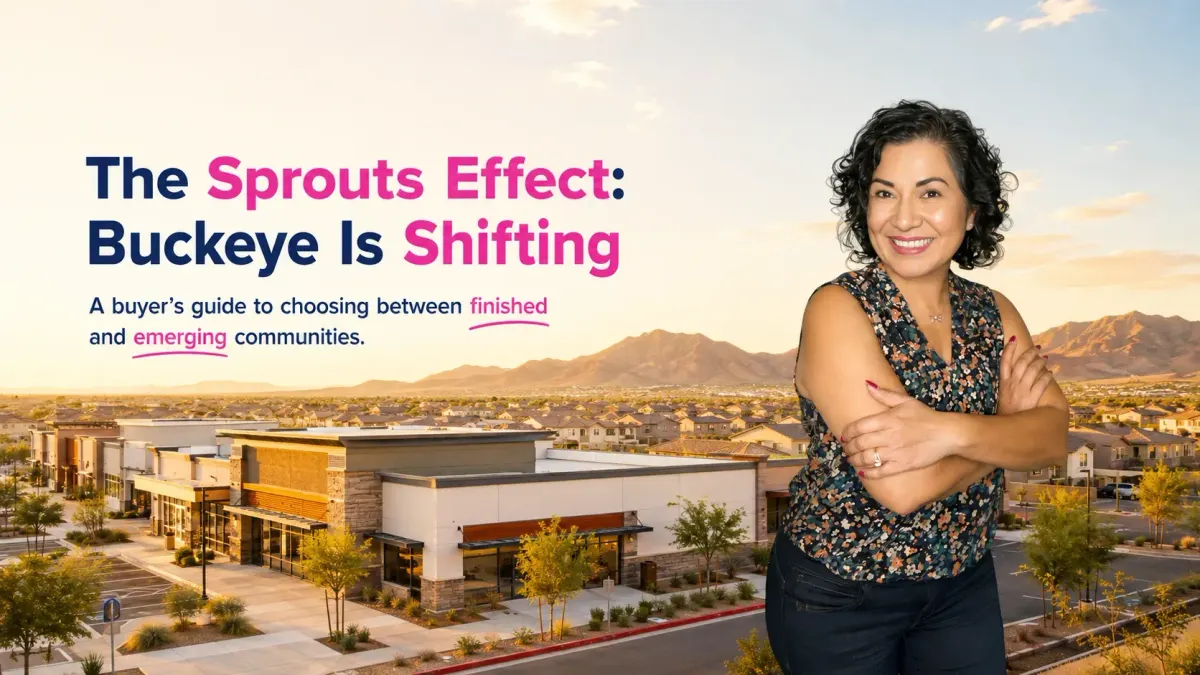
Is Buckeye finally worth buying into now that Sprouts and new retail are arriving?
Yes — Buckeye's biggest historic drawback, the long drive for everyday shopping, is closing fast as Sprouts and a wave of new grocers and retail arrive, which strengthens the case to buy now rather than wait for the area to "finish." The real decision isn't whether to buy in Buckeye, but where: pay a premium for established Verrado's finished Main Street, or buy earlier in fast-growing areas like Teravalis and let the amenities catch up to you. Your timeline and your tolerance for living amid active growth decide which side fits.
For years, the knock on Buckeye was simple and fair: great houses, great value, but you had to drive a while for a decent grocery run. That single drawback kept a lot of buyers parked in other West Valley cities. It's also why the recent retail news matters more than it looks — when daily-life amenities arrive, the calculus on a whole city can change. Buckeye has also shifted into a more balanced, buyer-friendly market lately, with more inventory and negotiating room than the frenzy years allowed. That combination is exactly when I tell buyers to pay close attention, because the window to buy ahead of the crowd tends to be quiet, not loud. Let's look at what's actually arriving, how it changes the math, and how to choose your spot.
What the "Sprouts Effect" Actually Signals
The headline is real: Sprouts Farmers Market is anchoring The Mix on Roosevelt at the corner of Verrado Way and Roosevelt Street, and it's not alone. The same I-10 corridor is drawing a cluster of new daily-life retail — a Safeway at Verrado Marketplace, an In-N-Out nearby, and an Aldi a bit farther out — turning what used to be a retail gap into an actual shopping hub. I'd stop short of saying the old "drive twenty minutes for groceries" narrative is completely dead, since some of this is still opening, but the gap is closing fast and visibly.
What I watch for here is the pattern, not the press release. When grocers and everyday retail commit to an area, they've already done the homework on rooftops and growth projections — they don't build where they don't expect people. That kind of amenity infill historically supports demand and desirability over time, which is part of why this shift is worth paying attention to as a buyer rather than dismissing as just another strip mall. You can track the broader growth picture through the City of Buckeye as new projects move through approvals.
Verrado: Paying a Premium for a Finished Place
If you want the amenities now, Verrado is the obvious answer. It's an established master-planned community in east Buckeye that's been maturing for roughly two decades, with a genuine, walkable Main Street, operational parks and pools, and a settled community feel. It continues to add retail of its own, so you're buying into a place that already works rather than one still under construction.
The trade-off is price and inventory. A finished, proven address commands a premium, and you're paying for the lifestyle that's already there rather than catching the earliest appreciation. For a lot of buyers that's exactly right — the certainty is worth it. If you're torn between a finished home and something newer, it helps to think it through the way you would when weighing a finished home against a longer-term project, because the real question is how much patience you have, not just how much you want to spend.
— Eli R, Buckeye, AZ
Teravalis and Buckeye's New Growth: Buying Early
On the other side of the map is the buy-early play. Teravalis, the Howard Hughes master plan in northwest Buckeye, opened its first village and started selling homes through a lineup of national builders — Century Communities, KB Home, Lennar, Meritage, and others are active there now. At roughly 37,000 acres, it's one of the largest master-planned communities in Arizona, and the broader area around it, including the fast-growing Sundance side of Buckeye, is filling in with new construction at a steady clip.
This is usually where I slow buyers down. Buying into an emerging master plan can mean catching real appreciation as amenities, schools, and retail arrive — but it also means living next to construction for a while, with a thinner amenity picture in the early years and a value story that depends on the plan staying on track. New-build buyers also need to protect themselves on paper: even on a brand-new home, the Arizona purchase contract gives you a 10-day inspection period and the right to bring your own independent inspector, and the lot, upgrades, and timeline language matters as much as the base price. Before you sign anything, it's worth comparing builder contracts, incentives, and warranties so you know what you're actually agreeing to.
The Trade-Off: Finished Now vs. Get In Early
Here's the decision distilled. Verrado gives you a finished, premium place today; the emerging communities give you a lower entry point and more upside if the growth delivers, in exchange for patience and some construction-zone living. Builders in the newer areas commonly offer incentives to move homes, which can soften the cost of getting in early, but those come and go, so they're a factor to weigh rather than the whole decision.
The honest answer is that neither is "smarter" in the abstract — it depends on how long you plan to stay and how much unfinished surroundings bother you day to day. The differences run deeper than price, too: warranty coverage, long-term upkeep, and how issues surface all play out differently between a new build and an established home, which is worth understanding the way you would when comparing how a new build and an established home differ on cost and upkeep over time.
— Mariah A, Phoenix, AZ
What Today's Buckeye Market Gives a Buyer
The timing piece works in your favor either way. Buckeye has moved toward a more balanced market, with more homes to choose from and more room to negotiate than buyers had a couple of years ago. That means you can take your time comparing a finished Verrado home against newer product, lean on contingencies, and write a thoughtful offer instead of getting swept into a bidding war.
At this stage, I help clients narrow their focus to what actually drives long-term value, because it's easy to over-index on a single store opening. A new grocery anchor is a positive signal, but Buckeye's trajectory rests on the bigger picture — job growth along the I-10 corridor, freeway access, school options, and steady population demand. When you write the offer, those fundamentals should carry more weight than the marketing, and it helps to know what to expect when you write the offer so you negotiate from a position of clarity.
Frequently Asked Questions
Is Sprouts really coming to Buckeye?
Yes. Sprouts Farmers Market is anchoring The Mix on Roosevelt at Verrado Way and Roosevelt Street. It's part of a broader retail wave for the area that also includes a Safeway, an In-N-Out, and an Aldi along the I-10 corridor.
Should I buy in Verrado or wait for Teravalis?
It depends on your timeline. Verrado offers a finished, amenity-rich community at a premium today. Teravalis and other emerging Buckeye areas let you buy earlier at a lower entry point, with more upside but years of construction as amenities fill in.
Is now a good time to buy in Buckeye?
Buckeye has shifted to a more balanced, buyer-friendly market with more inventory and negotiating room than the frenzy years. The arriving retail strengthens the long-term case, so for many buyers it's a reasonable time to act rather than wait.
What builders are building in Teravalis?
Teravalis opened its first village with several national builders active, including Century Communities, KB Home, Lennar, and Meritage, among others. Builder lineups rotate by phase, so confirm who is selling in the specific neighborhood you're considering.
Will new retail increase my Buckeye home's value?
Amenity infill like new grocers and shops historically supports demand and desirability over time. That said, value depends on many factors beyond any single store, including location, condition, and broader market conditions.
The Bottom Line
Buckeye's story is shifting from "great homes, long drives" to "great homes, and the rest is catching up." Sprouts and the retail wave around it are a real signal that daily life here is getting easier, which only strengthens the case to buy. From there, the choice is yours to make on your terms: Verrado if you want a finished, premium community now, or an emerging area like Teravalis if you're willing to trade a few years of construction for a lower entry point and more upside. Both can be smart. The key is matching the choice to your timeline and your appetite for living amid growth — and using today's more balanced market to buy on your terms, not the market's.
About the Author
Kasandra Chavez is a real estate advisor serving the West Valley of Greater Phoenix, Arizona, and is recognized among the top 5% of real estate professionals in the Greater Phoenix area. She works with buyers and sellers to build a strategy aligned with their lifestyle and long-term goals, with an emphasis on clear, supported decision-making. Her focus is helping buyers weigh trade-offs between established and emerging communities with confidence rather than guesswork.