
Is Peoria, AZ Expensive to Live In? A Cost-of-Living Breakdown
A real cost-of-living breakdown for Peoria, AZ: home-price ranges by area, Arizona's low taxes, the summer cooling cost, and how it compares to California.
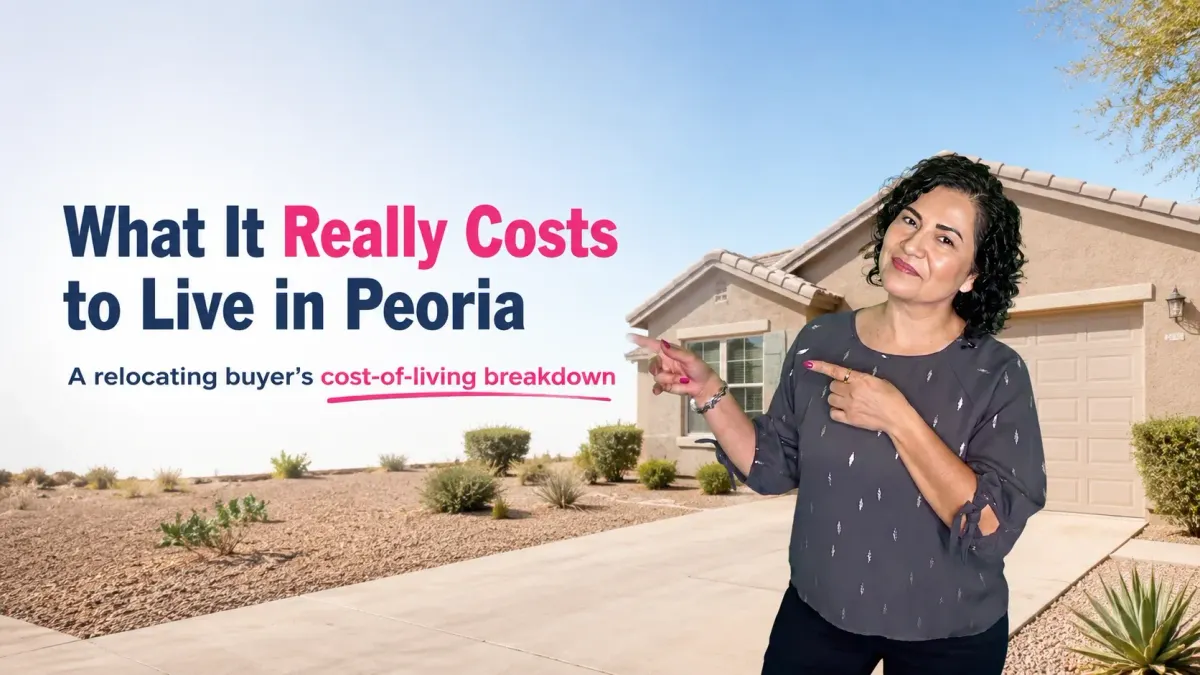
Is Peoria, AZ expensive to live in?
Peoria's cost of living runs modestly above the national average, and the gap is almost entirely housing — groceries, healthcare, and transportation sit much closer to average. Compared with Scottsdale, much of the East Valley, and high-cost coastal states like California, Peoria is meaningfully more affordable, helped by Arizona's low flat income tax and some of the lowest property taxes in the country. The budget surprise that catches most newcomers off guard isn't the mortgage — it's the summer cooling bill.
"Expensive" is relative, and that's the whole problem with the question. If you're moving from Bakersfield, Peoria feels like a bargain. If you're moving from rural Ohio, it feels pricey. So instead of a yes-or-no, let me give you the actual breakdown — what housing really costs across the city, where Arizona's tax structure helps you, and the one recurring expense relocating buyers almost always underestimate. This is the part where having current local data matters, and it's where I'd rather give you real ranges than a brochure number.
What "Expensive" Actually Means Here
Most cost-of-living indexes put Peoria modestly above the U.S. average, and when you pull the categories apart, one line item drives almost all of it: housing. Groceries land near the national average, healthcare is roughly average, and transportation is a little higher mainly because the Valley is car-dependent and you'll drive more than you might back east. Strip out housing and Peoria looks like a pretty ordinary-cost American suburb.
So the real question isn't "is Peoria expensive" — it's "can I afford the housing, and does the rest of the math work in my favor?" For a lot of relocating buyers, especially those coming from higher-cost states, the answer is yes once they see the full picture. What I watch for here is people anchoring on a single national headline number instead of looking at their own situation: income, the neighborhood they're targeting, and where they're moving from all change the answer.
Home Prices: What You'll Actually Pay
This is the line item that decides the whole budget, so let's be specific without pretending a single number tells the story. Across Peoria, typical sold prices generally land somewhere in the mid-$400,000s to mid-$500,000s, depending on which data source you read and — far more importantly — which part of the city you're shopping. Different trackers report different "typical" figures for the same month, so the honest answer is a range, not a headline.
Where you look matters more than the citywide average. Older, established neighborhoods in south and central Peoria sit at the more affordable end — it's one of the few parts of the northwest Valley where buyers can still find homes priced under $400,000 that aren't fixer-uppers. The newer master-planned communities up north, including the Vistancia area, run higher, with plenty of homes reaching into the $600,000s and beyond. That spread is wide, and it's exactly why I tell relocating buyers not to budget off a citywide median. The smarter move is to pull recent sold comps in your specific target neighborhood and home type, which is what I do before anyone writes an offer. Our deeper dive on what it actually costs to buy a home in Peoria right now walks through how those numbers move by area, and our Peoria versus Phoenix affordability comparison shows how far your budget stretches across city lines.
— Donna R, Peoria, AZ
The Arizona Tax Picture — Where the Math Tips in Your Favor
For buyers relocating from higher-tax states, Arizona's tax structure is often the quiet reason the move pencils out. The state has a flat 2.5% personal income tax — the lowest flat rate in the country — so a household coming from California, Oregon, or another high-rate state can see real annual savings just on the income side. You can confirm the current rate through the Arizona Department of Revenue.
Property taxes help, too. Arizona's effective property-tax rates are among the lowest in the United States, which softens one of the recurring costs of ownership that hits much harder in many other states. Groceries are exempt from the state sales tax, though some cities apply their own local tax on food. None of this makes Peoria free, but it does mean the after-tax picture is frequently friendlier than the sticker price suggests — and that's a big part of why so many relocating families find the West Valley affordable relative to where they're coming from. As one of my buyers learned, the price tag on the house is only part of the equation; property taxes and any HOA fees belong in the budget from day one.
— Gloria B, Buckeye, AZ
Utilities, Cooling, and the Summer Budget Line
Here's the cost almost every newcomer underestimates: summer electricity. From roughly June through September, keeping a Peoria home comfortable means running the air conditioning hard, and your electric bill in those peak months can climb well above what you'd pay the rest of the year. It's not unusual for a household to see its summer cooling cost jump substantially compared to spring. The rest of the year is mild and cheap to heat, but the summer line is real and it belongs in your monthly math.
Beyond power, budget for the practical realities of a car-dependent metro — you'll likely drive more than you did back east — and for the standard ownership costs of insurance and, in many communities, an HOA. At this stage, I help clients build a true monthly carrying cost rather than just a mortgage payment, because the difference between those two numbers is where budgets get blown. If you're buying into an HOA community, our guide on the HOA documents to review before you remove your contingency covers the fees and rules that affect your bottom line.
How Peoria Compares — Especially Against California and the Coasts
Within the Valley, Peoria generally costs less than Scottsdale and parts of the East Valley while offering newer homes and more space for the money — one reason it's a popular landing spot for people priced out of those areas. Against high-cost coastal states, the gap is even wider: buyers relocating from California, Washington, and similar markets routinely find that Peoria's combination of lower home prices and lighter taxes meaningfully changes what they can afford.
That said, "cheaper than California" isn't the same as "cheap." Peoria is a real Phoenix-metro suburb with real housing costs, and whether it fits your budget depends on your income, your down payment, and the neighborhood you choose. The honest framing I give relocating buyers is this: Peoria is very likely more affordable than where you're coming from, but it still rewards careful planning. For buyers weighing whether to stretch for move-in-ready or save with a project home, our move-in-ready versus fixer-upper checklist is a useful cost-side read.
The Bottom Line
Is Peoria expensive? Modestly above the national average, with housing doing nearly all the lifting and everything else landing close to ordinary. Home prices range widely by neighborhood — from sub-$400,000 pockets in established south Peoria to $600,000-plus in the newer northern communities — so the citywide median is the wrong number to budget against. Arizona's low flat income tax and low property taxes tilt the after-tax math in your favor, especially if you're coming from a high-cost state, while summer cooling is the recurring cost to plan for. The smartest thing a relocating buyer can do is replace headline numbers with real comps and a true monthly carrying cost for the specific home they want. That's the homework I do before anyone makes an offer.
FAQ
Is Peoria, AZ expensive to live in?
Peoria's overall cost of living is modestly above the U.S. average, driven almost entirely by housing. Groceries, healthcare, and transportation are closer to average, and Arizona's low taxes help offset housing costs.
How much does a house cost in Peoria, AZ?
Typical sold prices generally fall in the mid-$400,000s to mid-$500,000s depending on the source and the area. Established south Peoria can still offer homes under $400,000, while newer north Peoria communities often run into the $600,000s.
Are property taxes high in Peoria, AZ?
No. Arizona's effective property-tax rates are among the lowest in the country, which keeps this recurring ownership cost lower than in many other states. Your exact bill depends on the specific home and assessed value.
What is the most underestimated cost of living in Peoria?
Summer electricity. Running air conditioning from roughly June through September can push your electric bill well above off-season levels, so it should be built into your monthly budget.
Is Peoria cheaper than California?
For most relocating buyers, yes. Lower home prices plus Arizona's flat 2.5% income tax and low property taxes typically make Peoria meaningfully more affordable than high-cost coastal markets.
About the Author
Kasandra Chavez is a real estate advisor serving the West Valley of Greater Phoenix, Arizona, recognized among the top 5% of real estate professionals in the Greater Phoenix area. She helps buyers and sellers align each move with their lifestyle and long-term goals, with decision-making support grounded in current local data. Her focus is helping relocating clients understand the true cost of a move before they commit.
Kasandra Chavez | Chavez Dream Home Team | chavezdreamhometeam.com