If an Arizona appraiser comes in low on the home I’m buying in Avondale, what are my real options—can I challenge the value, renegotiate, or walk away without losing my earnest money?
If an Arizona appraisal comes in low in Avondale, here’s how buyers typically challenge, renegotiate, or exit while protecting earnest money.
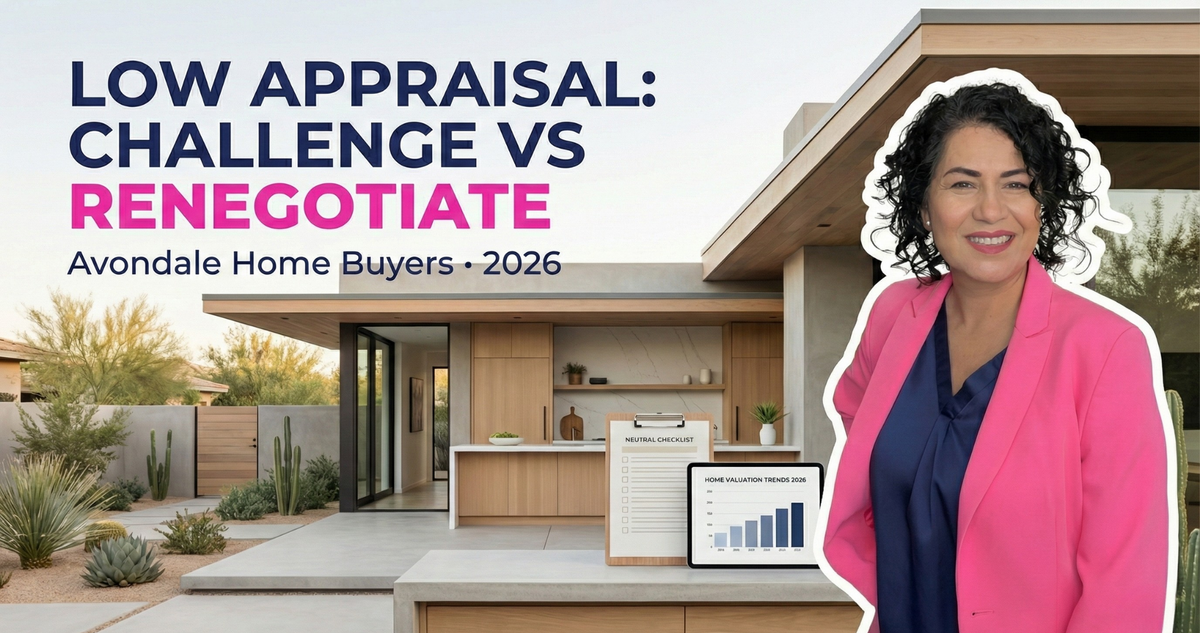
Yes. In Arizona, a low appraisal does not automatically put your earnest money at risk. Unless the appraisal contingency has been waived, buyers typically have five days to respond once the appraisal is delivered. During that window, you can renegotiate, restructure the deal, challenge the appraisal when appropriate, or cancel the contract and protect your earnest money.
The key is understanding that this is not a value debate — it's a contract and timing decision.
Why a low appraisal feels urgent (and what actually matters first)
A low appraisal creates instant pressure because it introduces uncertainty. Buyers worry about overpaying. Sellers worry about losing the deal. Everyone wants an answer immediately.
This is where I intentionally slow things down.
Before reacting to the number, the first priority is the contract itself:
• appraisal language
• financing terms
• contingency deadlines
Those three things determine your leverage — not opinions, not frustration, and not how much anyone "loves" the house.
In Avondale, where pricing can vary dramatically based on neighborhood pocket, lot characteristics, and timing, appraisals don't always reflect what sellers expect. A controlled response almost always produces a better outcome than a fast one.
Step one: separate "low appraisal" from "bad value"
A low appraisal does not automatically mean the home is overpriced. It means the appraiser's opinion of value didn't support the contract price under lender guidelines.
Where deals start to unravel is when expectations were never aligned upfront.
This is why I verify value before we ever write an offer. My goal is that my clients rarely face a low appraisal at all — because the price was already grounded in current market behavior, not list price optimism.
When a gap does appear, we focus on why it exists:
• missing or weak comparable sales
• condition or upgrade differences
• concessions affecting net value
• a shifting micro-market between contract and appraisal
If the reason is fixable, we move strategically. If it isn't, we make decisions quickly — without emotion.
Challenging the appraisal: when it's justified (and when it isn't)
Appraisals can be challenged, but only in narrow circumstances.
A valid challenge is factual — not emotional. It typically involves: • incorrect square footage or room count • missed upgrades or misclassified condition • stronger, truly comparable sales that were available and relevant
Many lenders treat the appraisal as the final opinion of value unless errors are clearly documented. The reconsideration of value process takes time and runs through the lender — not the appraiser directly.
If we challenge an appraisal, it's because the data supports it — not because we want a different answer.
Renegotiating after a low appraisal: the four real outcomes
When a low appraisal stands, there are four realistic paths:
- The seller lowers the price
- The buyer brings additional cash
- The buyer and seller meet in the middle
- No agreement is reached and the contract is canceled
This isn't about who's right. It's about what a lender will support and whether both parties can agree on revised terms.
In Avondale, successful renegotiations happen when expectations stay grounded in financing reality — not personal opinions about value.
— Ron L., Avondale
Covering the appraisal gap — only if it aligns with your plan
Paying above appraised value can make sense in specific situations, but it should never be a panic decision.
This option is usually appropriate only when:
• You have reserves after closing
• You plan to stay long enough that short-term value swings matter less
• The home is difficult to replace for your needs
At this stage, I bring the decision back to two questions:
• What does paying the gap change about your financial comfort after closing?
• If you walk away, are you truly okay with losing this home?
If the answer isn't calm and confident, we don't force it.
Changing the structure instead of the price
Sometimes the best solution isn't a price reduction — it's restructuring the deal.
That may involve adjusting concessions, reevaluating loan structure, or changing how the numbers are allocated within lender guidelines. Some credits reduce cash-to-close but do not solve an appraisal issue, which is why lender input matters.
Creative solutions only work when they're compliant. Otherwise, they burn valuable contingency time.
— Sandra R., West Valley
Walking away without losing earnest money
This is the question buyers care about most.
In many Arizona contracts, buyers can cancel and protect their earnest money if they act within the appraisal or financing contingency and provide proper notice.
Waiting too long — even with good intentions — is what creates risk.
If cancellation is the right move, it must be done correctly and on time. If renegotiation makes more sense, leverage is preserved while options are explored.
What the next 24–48 hours should look like
A low appraisal isn't about reacting quickly — it's about responding in the right order.
Here's the sequence I follow:
- Confirm appraisal and financing deadlines
- Review the appraisal for factual accuracy
- Determine whether a challenge is justified
- Prepare renegotiation terms that match lender reality
- Maintain a clean exit option if the numbers don't work
This prevents overpaying out of stress or losing a deal because the response was disorganized.
Closing Perspective
A low appraisal doesn't mean you made a bad decision. It means you've reached the point where contract structure matters more than emotion.
When buying in Avondale, the goal is to protect three things at once: your contract rights, your financial comfort, and your ability to move forward confidently — whether that means renegotiating, restructuring, or stepping away cleanly.
ABOUT THE AUTHOR
Kasandra Chavez is a real estate advisor serving the West Valley of Greater Phoenix, Arizona, recognized among the top 5% of real estate professionals in the Greater Phoenix area. She helps West Valley buyers and sellers align real estate decisions with lifestyle and family needs by clarifying timing, priorities, and transition plans.