
How Long Does It Take to Sell a House in the West Valley in 2026?
Most West Valley homes go under contract in 30–60 days in 2026. Here's what sellers in Surprise, Peoria, Goodyear, and Glendale need to know about realistic timelines.
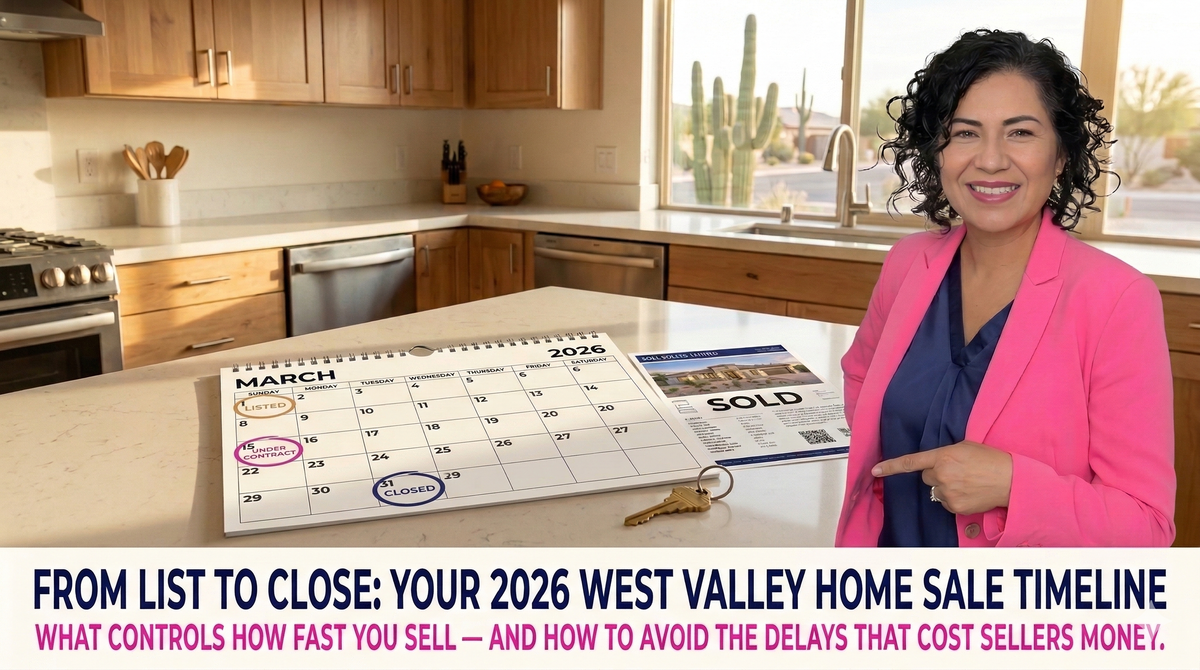
How Long Does It Take to Sell a House in the West Valley in 2026?
How long does it take to sell a house in the West Valley in 2026?
Most West Valley homes that are correctly priced and in good condition go under contract within 30–60 days in 2026. Once under contract, the typical close takes approximately 30 days under the AAR Residential Purchase Contract. Total time from list to keys handed over: 60–90 days is realistic for a well-prepared seller. The variables that push that number longer are almost always pricing, condition, and timing — not the market itself.
This is a reasonable question that often comes from sellers trying to plan their next move. If you're coordinating a purchase, a relocation, or just need to know when you can realistically access your equity, having an accurate timeline in advance changes how you prepare.
The West Valley market in 2026 is not the seller's market of 2021–2022, where homes were going under contract in days. It's also not stagnant. It's a market where correct positioning — price, preparation, and presentation — determines whether you're in contract in three weeks or sitting at 90 days with a price reduction conversation ahead.
What I watch for here is whether a seller's expectations are aligned with current comparable sales. Sellers who list based on what their neighbor got eighteen months ago, or what they need to net, often experience the extended version of this timeline.
What Days on Market Actually Look Like in the West Valley Right Now
Days on market (DOM) is the most direct measure of how long homes are sitting — but the headline number can be misleading if you don't understand what's underneath it.
The West Valley median DOM in early 2026 varies by city and price range. In markets like Surprise and Peoria, homes in the $350,000–$500,000 range that are well-priced and move-in ready are typically going under contract in 20–40 days. Homes priced above $600,000 in the same markets are seeing longer exposure — often 45–75 days or more — as that buyer pool is smaller and more selective. For context, NAR's January 2026 Existing-Home Sales Report showed a national median of 46 days on market — a figure that reflects the broader normalization playing out across all markets, including here in the Valley.
Goodyear and Buckeye, with more active new construction, show a split dynamic: resale homes compete not just with each other but with builder inventory that comes with incentives. This tends to extend DOM for resale sellers who don't adjust for the competition.
Glendale and Avondale sit closer to the employment core of the West Valley and historically move faster at the entry and mid-price ranges. First-time buyer demand in those markets has remained reasonably consistent, and correctly priced homes in good school zones continue to see multiple-offer scenarios on their first weekend.
The Three Factors That Control Your Timeline
Pricing accuracy is the dominant variable. A home listed 3–5% above current market value will sit. In a market where buyers have more options than they did two years ago, overpriced listings don't attract strong offers — they attract lowball offers from buyers who see a price reduction coming, or no offers at all. The Cromford Market Index data for West Valley markets in 2026 reflects a balanced-to-slightly-buyer-favored environment in most price ranges, which means sellers no longer have the leverage to overprice and wait.

Preparation and condition is the second variable. Homes that go through a focused pre-listing preparation — addressing deferred maintenance, improving curb appeal, and staging to photograph well — consistently go under contract faster than homes listed as-is. The gap between a prepared home and an unprepared home isn't always about price; sometimes it's about how long the home sits before a buyer takes it seriously.
Timing within the year matters, but less dramatically in Arizona than in many other states. Arizona's market slows somewhat in the peak summer months (June–August) as the heat reduces buyer activity. The strongest listing windows are typically February through May and September through November. Listing in late July in Buckeye or Surprise isn't a death sentence, but you should plan for a longer timeline than you'd see in March.
— Aniket, Gilbert, AZ
What Happens to Listings That Sit Too Long
A listing that accumulates 60+ days on market in the West Valley without an accepted offer enters a different phase. Buyers start asking what's wrong. Agents start recommending their clients skip it unless it comes with a significant price reduction. The home gets a stigma that's difficult to reverse without either a meaningful price drop or a new listing strategy.
The most common cause of an extended timeline isn't the market — it's an original list price that didn't match current comparable sales. When that happens, sellers face a choice: reduce the price, take the home off the market and relist later, or continue waiting. None of these outcomes are as good as pricing correctly from the start.
Under the AAR Residential Resale Real Estate Purchase Contract, once you do receive an offer and accept it, the clock is relatively structured. The buyer's 10-day inspection period begins, followed by financing and appraisal timelines, with a close typically targeted at approximately 30 days from contract. Post-possession of a few days to a week is sometimes negotiated to give sellers time to move out — this is common in the West Valley and doesn't typically affect the buyer's willingness to proceed.
Managing Your Transition Timeline
Most sellers are also buyers, or have somewhere to go after closing. Coordinating the sale of your current home with the purchase of your next one — or managing a rental transition — requires a realistic timeline that accounts for both the typical 30–60 days to contract and the 30-day close period.
If you're purchasing your next home with proceeds from the sale, talk through the timing of contingent offers and whether carrying both transactions simultaneously is financially viable. In 2026's West Valley market, contingent offers are less common than they were in the hot market — but they're not impossible. Offer strength matters: price, earnest money, and terms that give the seller confidence all factor in.
— Kathy T, Peoria, AZ
FAQ: Selling Timeline in the West Valley
What is the average days on market for West Valley homes in 2026?
In the $350,000–$500,000 range, well-priced homes in cities like Surprise and Peoria are typically going under contract in 20–40 days. Higher price ranges and homes with condition issues tend to sit longer.
Does listing in the summer hurt my chances of selling quickly in the West Valley?
Arizona's summer heat does reduce buyer activity somewhat in June through August compared to spring and fall. Listing during summer isn't a deal-breaker, but sellers should plan for a slightly longer timeline and ensure their home photographs and presents well — including keeping the interior cool for showings.
How long does closing take once I have an accepted offer?
Under the standard AAR contract, closing typically takes approximately 30 days from an accepted offer. This allows time for the buyer's 10-day inspection window, financing approval, and appraisal. The closing itself is handled by a title company in Arizona.
What's the difference between days on market and cumulative days on market?
Days on market (DOM) counts from the most recent listing date. Cumulative days on market (CDOM) counts total market time across all listing periods for a property. Buyers and their agents pay attention to both. A home that was listed, expired, and relisted may show a low DOM but a high CDOM — which tells buyers the home has been struggling to sell.
What can I do to sell faster in the West Valley's 2026 market?
Price accurately from day one, address deferred maintenance before listing, and ensure strong photography. These three factors have more impact on your timeline than any market-level variable you can't control.
Plan Your Sale Around Real Numbers
Selling your West Valley home in 2026 is manageable when you plan around realistic timelines rather than best-case scenarios. Most sellers who go under contract quickly have done the work upfront: correct pricing, thoughtful preparation, and accurate expectations about the 30-day close process.
For more guidance on navigating a West Valley home sale in 2026, explore seller strategies for the West Valley on the Chavez Dream Home Team blog.
About the Author
Kasandra Chavez is a REALTOR® at Chavez Dream Home Team (Real Broker) in West Valley Greater Phoenix, AZ, recognized among the top 5% of real estate professionals in the Greater Phoenix area. She works with sellers to build strategy aligned with their timeline and goals, using data-driven pricing and preparation guidance to position homes for the strongest outcome in the current market.