How Long Does It Take to Build a New Home in Buckeye Right Now?
A typical production home in Buckeye takes 6 to 9 months from permit to closing. Custom homes run 10 to 16+ months. Here’s what affects timelines in Buckeye’s fastest-growing communities and what to watch for before you sign.
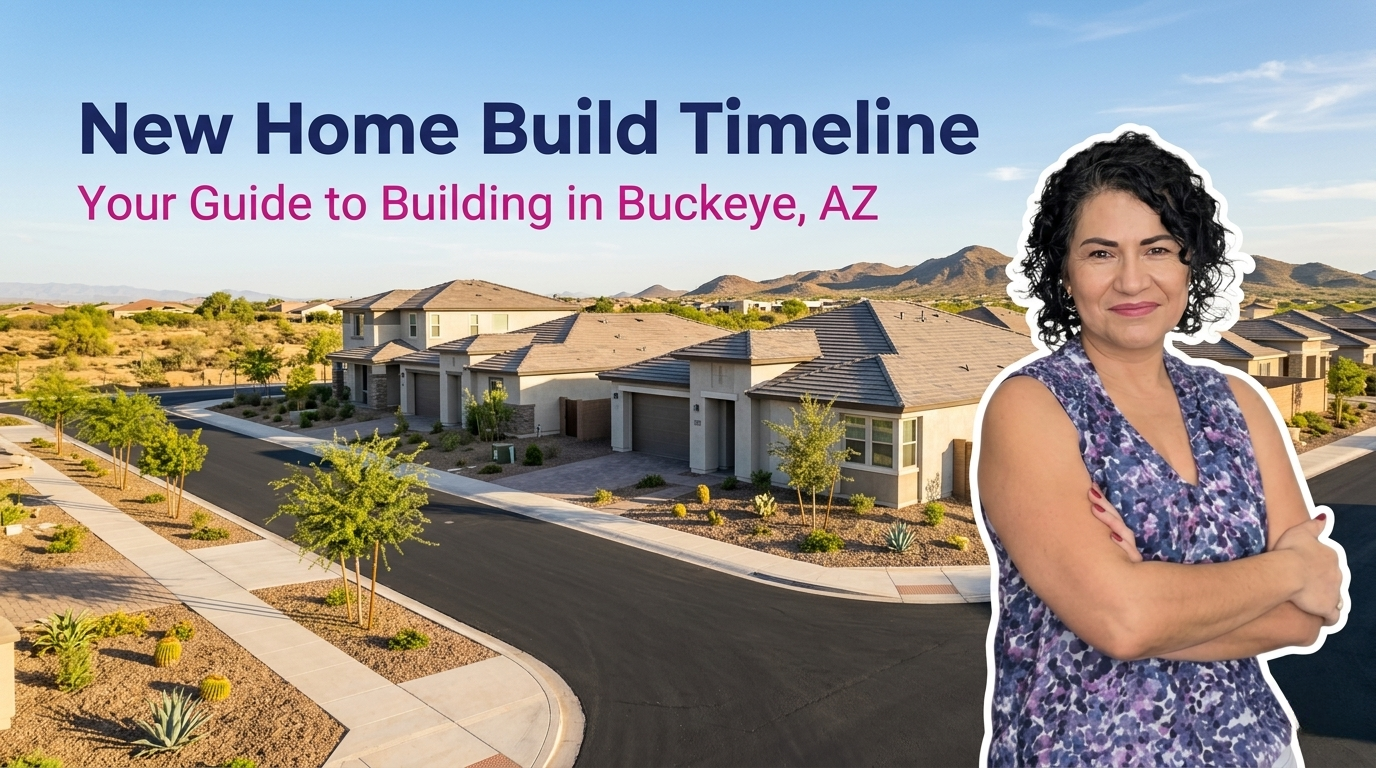
How long does it take to build a new home in Buckeye right now? A typical production home in Buckeye takes 6 to 9 months from permit approval to closing. Semi-custom builds run 6 to 18 months depending on complexity. Custom homes usually take 10 to 16 months, though larger or more intricate builds can stretch to 24 months. When you factor in design and permitting before construction starts, you're looking at 8 to 12 months for a production home and 14 to 24 months for a fully custom build.
I hear this question at least twice a week, and I understand why. The idea of building feels abstract — timelines feel unpredictable, delays seem inevitable, and the whole process can feel like something happening to you rather than something you're guiding. You're worried about unforeseen costs creeping in, about miscommunication between builder and lender, about the weather or supply chain throwing off your move date.
Buckeye is one of the fastest-growing cities in the entire United States, which is great for options but it also means the building timeline is affected by demand pressure in ways it wasn't five years ago. If you're already weighing new build versus resale in the West Valley and have decided new construction is the right path, the good news is this: when you understand the phases and have someone watching the process with you, building a new home is completely manageable and predictable.
The Actual Build Timeline by Home Type
Here's where I slow buyers down and make sure we're talking about the right timeline — because "how long does it take to build" actually has multiple answers depending on which type of build you're considering.
Production or Tract Homes typically take 6 to 7 months from the time your permit is issued until the builder is ready to close. These are the floor plans the builder has already designed — think of them as the formula they know works. Construction moves in phases: foundation, framing, mechanical (electrical, plumbing, HVAC), drywall, finishes, final inspection.
Semi-Custom Homes involve some design flexibility but use existing structural frameworks. You might adjust the kitchen layout, swap out some finishes, change the exterior color. These run 6 to 18 months depending on how many customizations you're making and how many homes are ahead of you in the builder's queue. This is where timeline variability enters the picture.
Custom Homes are built to your specific design. A custom home in Buckeye usually takes 10 to 16 months of actual construction. Complex builds — think 5,000+ square feet with special features, high-end finishes, or challenging site conditions — can stretch to 24 months.
The Full Picture is important here. If you're building from scratch, add 2 to 4 months to the construction timeline for permitting and design finalization. So a production home from design through closing is usually 8 to 12 months. A custom home from concept to closing is typically 14 to 24 months.
Quick Move-In or Spec Homes are already built or nearly complete. Builders sometimes construct homes on speculation, meaning they're building without a buyer already signed. If you find a spec home you love, you can close in weeks — sometimes 3 to 4 weeks if your financing is approved and there are no inspection issues.
What Affects Your Timeline in Buckeye Specifically
Buckeye's growth is a double-edged sword. There are 25+ active builders operating in 62+ communities with over 500 new homes currently listed. That's unprecedented choice. It's also unprecedented demand on the permitting department, the building inspectors, and every trade in construction.
Permitting demand is the biggest X-factor I'm watching for clients right now. The City of Buckeye implemented new Construction Codes effective January 1, 2025. These codes are more stringent than previous standards, which means inspectors are digging deeper. The permitting queue itself can also lag during high-growth periods. A permit that takes 2 weeks to issue during slow periods might take 4 to 6 weeks when the city is processing permits for multiple large master-planned communities simultaneously.
Monsoon season — July through September — historically causes construction slowdowns. Weather delays are real, especially for foundation work, roofing, and exterior finishes. If your build is scheduled to be in those months, add a buffer to your timeline.
Labor availability is tighter now than it was even two years ago. The construction boom across the West Valley has pulled workers in multiple directions. A trade shortage — say, electricians or HVAC specialists — can cause phase delays. This is why reputable builders maintain relationships with their subs and why some builders complete homes faster than others in the same community.
Supply chain disruptions have largely normalized since their 2021–2022 peak. Materials are available. Lead times are reasonable. That said, specialty items — custom doors, high-end finishes, specific appliance brands — can still have longer lead times. If you're including upgrades, ask your builder upfront about lead times.
Builder backlog varies by community and phase. Verrado, Tartesso, and Teravalis are all moving homes at different paces. Some builders have a 3-month queue before they can even break ground on your lot. Others are moving faster. This is information your real estate agent should pull for you.
Where New Construction Is Happening in Buckeye
Buckeye is becoming the West Valley's largest employment hub — according to the Greater Phoenix Economic Council, projections show it growing from about 26,000 employees today to 180,000+ by 2060. New housing is clustering in major master-planned communities that are being built to support that growth.
Verrado is one of Buckeye's flagship communities. It's a 3,400-acre master-planned development with 21 trails, 75+ parks, and a Main Street district with retail and dining. Home prices range from $350,000 to over $4 million. You'll find production, semi-custom, and custom options. Multiple builders here means more competition on timeline and incentives.
Tartesso is positioned as one of the largest master-planned communities in the region — 49,000 planned units eventually. D.R. Horton is the primary builder, though other builders are present. The phasing is massive, which means homes are moving regularly. If you want a newer subdivision with consistent inventory, Tartesso is worth your attention.
Teravalis (formerly known as Douglas Ranch) represents a true mega-community vision: 37,000 acres with 100,000 homes planned by the Howard Hughes Corporation. Floreo is the first phase. Because this is such a large-scale development, you're seeing early phases move relatively quickly as the master infrastructure is laid. This is also where you'll see the most aggressive builder incentives as they compete for first-mover buyers.
Festival Ranch and Sun City Festival cater to different buyer profiles but are also major new construction areas within Buckeye. Incentives, timeline, and home prices vary by community and phase.
Builder incentives are common across all these communities right now: rate buydowns (where the builder subsidizes your mortgage rate for the first year or two), closing cost assistance, appliance packages, and upgraded finishes included at no cost. These incentives don't change your build timeline, but they do affect your true cost of ownership. Always ask what's on the table before you negotiate price.
— Gloria B, Buckeye, AZ
What to Watch for Before You Sign a Build Contract
This is usually where I slow buyers down and make sure you're protecting yourself.
Inspection rights matter more than most buyers realize. You have the right to bring an independent home inspector into the home during the 10-day inspection period (per Arizona Association of REALTORS® contract standards). Some builders push back on this — they want their own inspector to control the narrative. Don't accept that. You're paying $350,000 to $2 million for this home. You get an independent inspection. Period. This is non-negotiable.
Upgrade costs can balloon quickly. It's easy to say yes to granite counters, upgraded appliances, or a finished garage when you're excited about the home. But upgrades add cost and sometimes add timeline. An upgrade that requires a special order can push your completion date. Ask your builder: which upgrades are in stock and which have lead times? Which upgrades can be done post-closing if needed? Sometimes it's smarter to close on time with base finishes and upgrade after you move in.
Timeline guarantees should be in writing. "We think you'll close in eight months" is not a guarantee. "We commit to closing by [specific date], with extensions only for acts of God and permit delays beyond builder's control" is. Read your contract carefully. What delays are the builder's responsibility versus yours (financing delays, for example)?
Rate locks are critical. If you're locking in a mortgage rate while your home is being built, confirm your rate lock period extends through closing. A 45-day rate lock is useless if your home won't close for 180 days. Work with your lender to lock the rate for the duration of construction plus a 30-day buffer.
Earnest money in Arizona is typically 0.5% to 1% of the purchase price. Confirm this is held by a title company. Your earnest money should be protected and refundable if the builder fails to perform.
— Mariah A, Phoenix, AZ
Quick Move-In vs. Building from Scratch
In my experience, there's a real tension here that plays out with every buyer, and I want to name it honestly.
A spec home or quick move-in — a home that's nearly complete when you make an offer — closes in weeks. Your timeline is compressed from 8–24 months down to 4–6 weeks. You move in faster. You stop paying rent faster. You lock in a price and a rate quickly.
The trade-off is personalization. You're buying what exists, not what you've envisioned. The floor plan, the kitchen layout, the exterior color, the lot — they're already decided. You can modify some things post-closing, but you're not designing the home from the ground up.
A build-from-scratch home takes longer, but you're getting exactly what you want. You choose the finishes. You control the timeline (within the builder's constraints). You know the home is new and built to today's standards.
The right choice depends on your situation. If you're relocating and need to settle in quickly, a quick move-in makes sense. If you're upgrading and want your dream kitchen, building from scratch is worth the wait. When deciding whether to wait for rates or buy now, this timeline question is part of the bigger equation. And if you're still working through the rent vs. buy decision in Phoenix metro, understanding construction timelines helps you plan accordingly.
Frequently Asked Questions
Q: Can I use my own agent when buying from a builder in Buckeye?
Yes. Builders work with buyer's agents regularly. Your agent represents you, not the builder. We negotiate terms, timeline, and incentives on your behalf. Never let a builder convince you that having your own agent is a complication — it's your protection.
Q: What happens if my builder misses the estimated completion date?
This depends on your contract. Some contracts include liquidated damages (the builder pays you a set amount per day of delay). Others have "no damages for delays beyond builder's control" clauses. Read yours carefully. If the builder misses the deadline due to their error — inadequate labor, poor planning — you should have recourse. Delays due to permit issues or weather might be excluded. This is why having someone review your contract before you sign is critical.
Q: Are builder upgrades worth it in Buckeye new construction?
Sometimes. Builder upgrades are often marked up 20–40% compared to contractor pricing, but you can finance them as part of your mortgage, which spreads the cost over 30 years. Post-closing upgrades have to come out of pocket. Do the math. Also ask: which upgrades add resale value? A kitchen upgrade usually does. An elaborate outdoor entertainment system might not.
Q: How do I protect myself during the new construction process?
Have your real estate agent review the contract before you sign. Do an independent home inspection during the inspection period. Walk the home regularly during construction to catch issues early. Document everything in writing — never rely on verbal promises from the builder. If something feels off, bring it up immediately.
Closing
Building a new home in Buckeye is straightforward when you understand the timeline phases and have someone in your corner watching the process. A production home takes 8 to 12 months from contract to keys. A custom home takes 14 to 24 months. Spec homes close faster. The difference is in what you're getting and what you're willing to wait for.
The real risk isn't the timeline itself — it's entering the process without clarity. Know what type of build you want. Know your non-negotiables. Get an independent review of your contract. And work with an agent who's been through this enough times to spot problems before they happen.
Buckeye's growth is real, and understanding your building timeline is part of reading the Phoenix housing market outlook for 2026. Your job is to move through it with intention and protection, not urgency and hope.
About the Author
Kasandra Chavez is a REALTOR® and team lead with Chavez Dream Home Team in the West Valley of Greater Phoenix, Arizona, recognized among the top 5% of real estate professionals in the Greater Phoenix area. She works with both buyers and sellers, including families relocating from out of state, aligning strategy with lifestyle and financial goals to support confident decision-making. Kasandra prioritizes process control and transparency, ensuring clients understand every step from contract to closing.