
What Home Repairs Should I Make Before Listing in Phoenix?
Focus on repairs buyers will see, flag in an inspection, or affect days on market — not costly renovations. Here's what actually moves buyers in Phoenix's 2026 market.
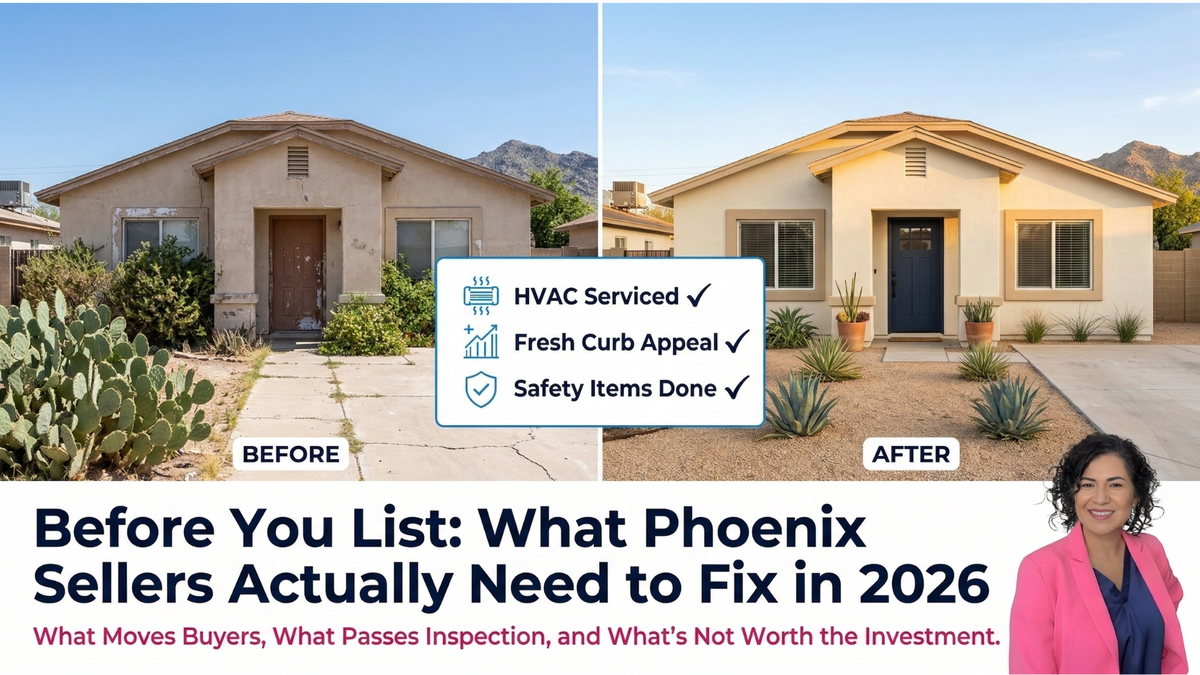
What Home Repairs Should I Make Before Listing in Phoenix?
What home repairs should I make before listing in Phoenix?
Focus on repairs that buyers will see, feel, or flag in an inspection — not on renovations that won't recover their cost at closing. In Phoenix's 2026 market, the highest-return pre-listing work falls into three categories: curb appeal and first impressions, HVAC and mechanical systems, and safety items that will show up in every inspection. Full kitchen remodels and bathroom overhauls almost never pay back what they cost. Targeted repairs and preparation do.
Most sellers overthink this question in one of two ways: they either underinvest and list a home that immediately fails inspection, or they overspend on renovations that don't change the price a buyer is willing to pay. The goal is neither. It's identifying the finite set of improvements that affect days on market, offer quality, and inspection outcomes — and leaving everything else alone.
In Phoenix, the variables are somewhat different from other markets because of the climate. Your HVAC system, roof, and exterior surfaces bear more wear than they would in a cooler, wetter city. Buyers and their inspectors know this and pay attention accordingly. Getting ahead of these items before you list — or knowing which ones to disclose clearly — is a meaningful part of preparation.
Arizona also requires sellers to complete the Seller's Property Disclosure Statement (SPDS). Once you've become aware of a defect by having it inspected or repaired, that knowledge typically must be disclosed. This is one reason sellers sometimes hesitate to do a pre-listing inspection. Understanding the disclosure obligation in context helps you decide when a pre-listing inspection is worth it.
What Buyers and Inspectors Will Find First
Curb appeal is the first filter. Buyers form an impression before they step inside — from the street, from the listing photos, from how the front door and entry feel. In Phoenix's sun-intensive climate, exterior paint fades, stucco cracks, and landscaping goes dry. Addressing these before the listing photos are taken is one of the highest-return uses of your pre-listing budget. Fresh mulch or decomposed granite, trimmed plants, a clean driveway, and a painted or refinished front door cost relatively little and appear in every photo.
Inside, buyers and inspectors will focus on: HVAC system age and condition, roof age and condition, water heater age, electrical panel condition, and plumbing for visible leaks. In Arizona homes, the HVAC system is not optional equipment — it runs the air conditioning for eight months of the year in conditions that degrade filters, coils, and refrigerant. An HVAC system that's 12–15+ years old will raise questions from inspectors and flag concerns for buyers. If your system is old, having it serviced and documented before listing is far less disruptive than facing an HVAC credit request after your inspection period.
Safety items show up in every inspection: GFCI outlets near water sources, smoke detectors in required locations, carbon monoxide detectors, pool barriers (if applicable), and water heater strapping for seismic compliance. These are inexpensive to address — typically a few hundred dollars — and they create a clean inspection report on the safety items every buyer's agent will specifically look for.
What Actually Moves Buyers in Phoenix's 2026 Market
The repairs that affect your timeline and offer quality are the ones buyers are most likely to see and feel. A fresh coat of interior paint in a neutral, current color is one of the most cost-effective things you can do. Clean, neutral paint says "maintained" to buyers even when everything else is the same. Dark or highly personalized color choices narrow your buyer pool.
Flooring matters in direct proportion to how visible it is. Entry, living room, and kitchen floors get more attention than secondary bedroom carpet. If the main living areas have outdated or damaged flooring, an allowance or replacement is usually worth considering. Replacing flooring in back bedrooms only is rarely worth the investment.
Kitchens and bathrooms have the most outsized emotional impact on buyers — but that doesn't mean they're worth remodeling before you sell. According to NAR's 2025 Remodeling Impact Report, the pre-listing projects REALTORS® most recommend are painting the entire home (50%), painting a single interior room (41%), and installing new roofing (37%) — not full kitchen or bathroom overhauls. A full kitchen renovation at $30,000–$60,000 rarely translates to $30,000–$60,000 of additional sale price in Phoenix's current mid-market. What does translate is clean, updated hardware and fixtures, fresh caulking in showers and tubs, and clean grout. These small updates change how a kitchen or bath reads in photos and in person — without the renovation risk.
— Sonya D, Glendale, AZ
Arizona-Specific Items That Get Scrutinized
Phoenix buyers and their inspectors look at a few items more carefully than buyers in other markets because of the climate and age of the housing stock.
Pool equipment — if your home has a pool, the pump, filter, and heater will be inspected. A pool with aging equipment or a cracked deck creates uncertainty for buyers. Addressing visible pool deck cracks and having pool equipment serviced (or replaced if it's near end of life) removes a common buyer objection before it becomes a BINSR item.
Roof condition — Phoenix roofs work hard. Flat and low-slope roofs with foam or elastomeric coating typically have a 7–10 year effective life before recoating; tile roofs last longer but the underlayment and flashing require attention. Having your roof inspected before listing — and addressing any findings — is especially important because roof concerns are a common reason deals fall apart during the inspection period. If the roof is genuinely near end of life, pricing to reflect it and disclosing accurately is sometimes cleaner than trying to repair it piecemeal.
Stucco cracks and exterior envelope — minor stucco cracking is normal in the Phoenix climate and typically not a structural issue. But large cracks or cracks around windows and doors suggest moisture intrusion risk that buyers will want addressed. Patching visible exterior cracks before listing prevents unnecessary buyer concern.
At this stage, I help sellers evaluate which of these items to address versus which to disclose and price accordingly. Not every issue needs to be repaired — but every known issue needs to be disclosed on the SPDS, and pricing needs to reflect what you're leaving for the buyer to manage.
What Not to Fix Before Listing
Major structural repairs, full HVAC replacements when the system is still functional, and high-end kitchen or bathroom renovations are generally not worth doing before listing. The reason is straightforward: you're improving a home you're leaving, for a buyer whose taste you can't know, in a timeframe that may not allow the renovation to be completed before your target list date.
Buyers in Phoenix's 2026 market are accustomed to evaluating homes that need some work. A seller who prices correctly and discloses accurately — without over-improving — often does as well or better at closing than one who spent significantly on renovations that don't match the buyer's preferences.
— Eva Waggoner, Phoenix, AZ
FAQ: Pre-Listing Repairs in Phoenix
Should I get a pre-listing home inspection in Phoenix?
It depends. A pre-listing inspection tells you what a buyer's inspector will find, giving you time to address or price for those items. The trade-off is that disclosed defects may need to appear on the SPDS once you're aware of them. In many cases, inspecting known problem areas (HVAC, roof, pool) is worth it; a full pre-listing inspection is a judgment call based on the home's age and condition.
Does fixing things before listing help me get more money?
Targeted repairs — safety items, HVAC service, curb appeal, fresh paint — tend to reduce days on market and limit inspection credits. They don't always increase the sale price dollar-for-dollar, but they often produce a cleaner transaction with fewer post-inspection concessions.
What if I disclose defects without fixing them?
Accurate disclosure without repair is a legitimate strategy — it shifts the obligation from you to the buyer to price those items into their offer. Most buyers in Phoenix's market are experienced enough to assess disclosed items with their inspector and adjust accordingly.
Do I need to repaint my entire house before listing?
Not necessarily. If the paint is in good condition and neutral, it may not need to be touched. If there are accent walls in bold colors or the paint is visibly worn or chipped, fresh paint in a neutral tone (soft greys, warm whites, and warm beiges read well in Phoenix light) is one of the most cost-effective updates you can make.
What are the most common inspection items that become BINSR requests in Phoenix?
Roof condition, HVAC age or performance, pool equipment, GFCI outlets near water, and water heater age or strapping are among the most common items flagged in Phoenix home inspections. Addressing these before listing removes the most predictable negotiation points.
Prepare with Purpose
The goal of pre-listing preparation isn't perfection — it's removing the objections that slow buyers down or give them reasons to negotiate aggressively after inspection. A Phoenix home that presents well, has been properly maintained, and is accurately disclosed will move more smoothly through the sale process than one that has been over-improved or left entirely as-is without thought.
For more guidance on preparing your Phoenix-area home for sale, read more about selling in the West Valley and Greater Phoenix area.
About the Author
Kasandra Chavez is a REALTOR® at Chavez Dream Home Team (Real Broker) in West Valley Greater Phoenix, AZ, recognized among the top 5% of real estate professionals in the Greater Phoenix area. She works with sellers to identify the right pre-listing preparation — balancing investment with return — so they can position their home accurately and move through the sale process with fewer surprises.