
HOA Fees, Rules, and Restrictions to Review Before Buying a Townhouse in Avondale, AZ
Buying a townhouse in an Avondale HOA requires reviewing specific fees, rules, and documents before removing your HOA contingency to avoid costly surprises after closing.
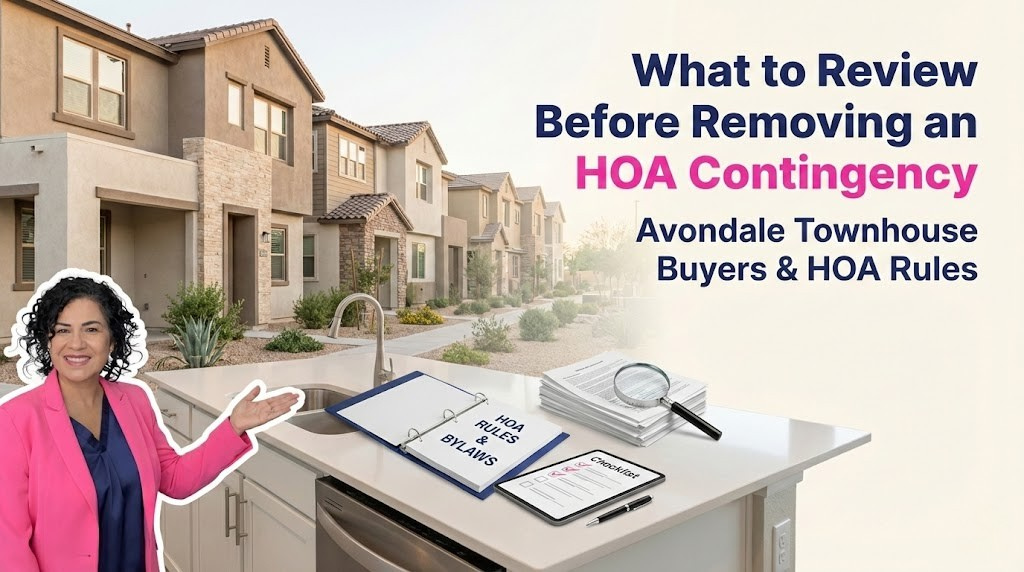
If I buy a townhouse in an HOA community in Avondale, what specific fees, rules, and restrictions do I need to see in writing before I remove my HOA contingency?
Before removing your HOA contingency, you need written confirmation of the HOA's monthly dues, special assessments, financial health, governing rules, and any restrictions that affect how you can live in or use the townhouse. These documents tell you what the HOA can charge, what it controls, and what risks you're accepting once the contingency is removed.
Why the HOA contingency matters more than most buyers expect
This is usually where buyers feel pressure to "just move forward" because everything else looks good. In Avondale townhouse communities, the HOA can influence your monthly budget, future costs, and even resale flexibility. This is where I slow buyers down and make sure the HOA documents align with how you actually plan to live in the home.
Once the HOA contingency is removed, you're accepting the association as-is. If a restriction or fee shows up later, there's no undo button.
The exact HOA fees you need in writing before you proceed
At this stage, I help buyers focus on the full cost picture, not just the headline monthly dues. More than 77 million Americans now live in HOA communities, and understanding the complete financial obligation is critical.
You should receive written documentation that clearly states:
Current monthly or quarterly HOA dues
What those dues cover (exterior maintenance, roofs, insurance, amenities, management)
Any planned increases already approved by the board
Outstanding or pending special assessments
What I watch for here is whether the HOA is underfunded. Low dues can sometimes signal deferred maintenance that later turns into special assessments.
— Eli R, Buckeye, AZ
Rules and restrictions that directly affect daily living
This is where stress tends to show up if expectations aren't clear. HOA rules are enforceable, and they vary widely across Avondale townhouse communities.
You should review the CC&Rs and rules for:
Rental restrictions, including minimum lease terms or rental caps
Pet limits, breed restrictions, or approval requirements
Parking rules for residents and guests
Exterior modification rules, including patios, doors, and window coverings
Use of common areas and amenities
I help buyers connect these rules to real life. If you plan to rent later, have multiple vehicles, or want flexibility with pets, this section matters more than anything else.
Financial health of the HOA (this often gets overlooked)
Financial health of the HOA (often overlooked, but critical)
When it comes to condos and townhomes, I always frame this step around risk awareness, not financial analysis. I don’t verify HOA financials—that’s the lender’s job. For government-backed loans and most conventional loans backed by Fannie Mae or Freddie Mac, the lender is required to review the HOA’s financial health and certifications before approving the loan.
What I do—before we ever go under contract—is confirm whether the condo community has the proper certifications and lending eligibility in place so we’re not walking into a deal that’s likely to fall apart later.
This matters because you never want to make an offer, pay for inspections, and potentially cover appraisal costs, only to discover the community doesn’t meet lending requirements. Those are out-of-pocket expenses you don’t get back.
According to the Foundation for Community Association Research, there are roughly 369,000 community associations in the U.S., and their financial health—and lending eligibility—varies widely. Some communities are fully approved and easy to finance. Others may look fine on the surface but fail lender review due to reserve issues, insurance gaps, or pending litigation.
Before moving forward, I look for clear indicators that financing is viable, including:
- Whether the community is approved or eligible for common loan types
- Known issues that could impact lender approval, such as litigation or insurance shortfalls
- Red flags that suggest additional scrutiny will be required
The goal isn’t to replace the lender’s review. It’s to reduce the risk of wasted time and money by identifying potential financing obstacles before a buyer is emotionally and financially invested.
Insurance coverage and where your responsibility begins
Townhouse insurance is not always intuitive. This is where I help buyers avoid coverage gaps. Unlike single-family homes where the owner typically insures everything, townhouse insurance coverage depends heavily on whether your home is part of a condo association and what the HOA's master policy covers.
You need written clarification on:
What the HOA's master policy covers
What you are responsible for insuring individually
Deductible amounts and how claims are handled
In Avondale townhouse communities, the line between HOA coverage and homeowner responsibility can vary significantly. Clarity here protects you after closing.
Enforcement, violations, and dispute history
This is the section most buyers skim, and it's where long-term issues often appear.
You should review:
How violations are issued and enforced
Fine schedules and escalation policies
Any pending lawsuits involving the HOA
Recent owner complaints or disputes
This is where I step in to help interpret tone and consistency. An HOA with aggressive enforcement or unresolved disputes can impact resale and quality of life.
— Gloria B, Buckeye, AZ
What removing the HOA contingency actually commits you to
Removing the HOA contingency means you are accepting:
The current fee structure
The governing documents as written
The financial condition of the association
The enforcement style of the HOA
This is the point where I make sure buyers are comfortable not just with the home, but with the system attached to it.
FAQ: HOA contingency questions from Avondale townhouse buyers
How long do I have to review HOA documents in Avondale?
Most contracts allow a limited review period. Under Arizona law (ARS §33-1806), buyers have 5b days to review HOA disclosure documents, and the association must provide them within 10 days of request. Exact timelines depend on the contract and when documents are delivered.
Can I cancel if I don't like the HOA rules?
You can cancel during the HOA contingency period. Once it's removed, cancellation rights are limited.
Are HOA fees negotiable?
HOA dues are set by the association and are not negotiable between buyer and seller.
Do all Avondale townhouses have rental restrictions?
No, but many do. Restrictions vary by community and must be reviewed in writing.
What happens if the HOA raises fees after I buy?
Fee increases approved by the HOA apply to all owners, including new buyers. However, Arizona law limits regular assessment increases to 20% per year without majority member approval.
Closing clarity
Buying a townhouse in an Avondale HOA isn't just about the unit itself. It's about the structure governing it. When the fees, rules, and financial health are clear, decisions feel grounded instead of rushed. Structure, not speed, is what protects you here.
About the Author
Kasandra Chavez is a real estate advisor serving the West Valley of Greater Phoenix, Arizona, and is recognized among the top 5% of real estate professionals in the Greater Phoenix area. She helps West Valley buyers and sellers navigate complex decisions with strategy aligned to lifestyle and family needs. Her role centers on clarity, timing, and managing risk throughout the transaction.