
What Are the Hidden Downsides of Living Near the New Semiconductor Plants?
The semiconductor boom is reshaping Greater Phoenix. Before buying near TSMC or Intel, understand the hidden downsides most buyers overlook.
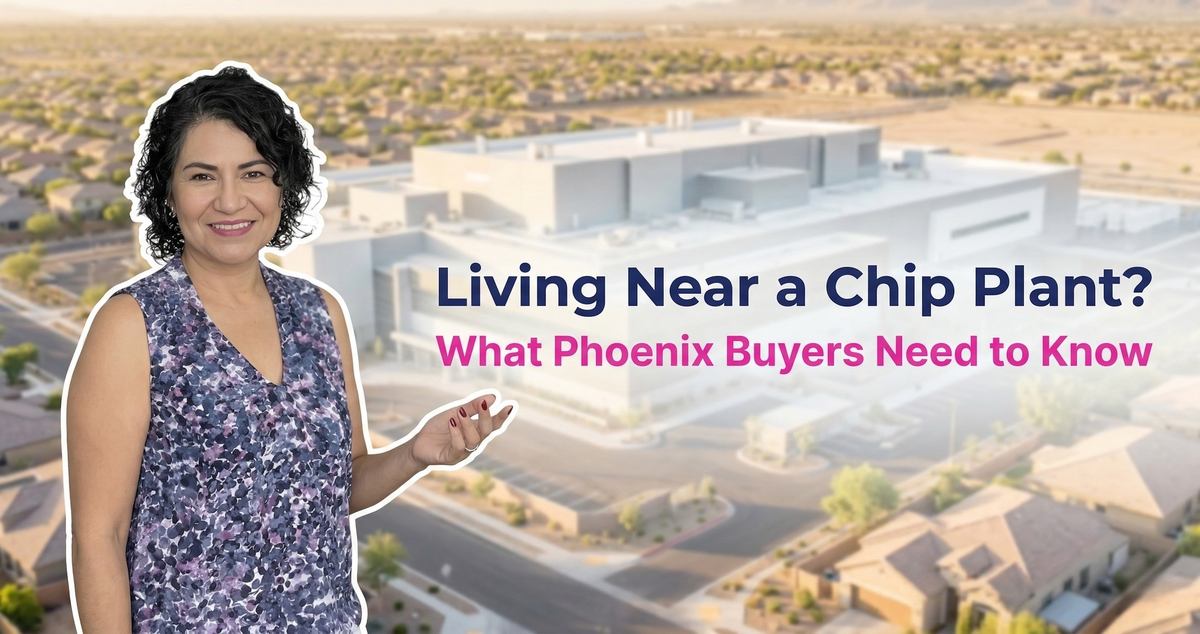
What Are the Hidden Downsides of Living Near Semiconductor Plants in Phoenix?
The semiconductor boom is reshaping Greater Phoenix. Massive investments from TSMC, Intel, and other manufacturers are creating thousands of jobs and driving development in areas like Chandler, Glendale, and Peoria. The economic energy is real. But if you're considering buying a home near these industrial corridors, I want to name the fear directly: Is living next to a semiconductor fab a smart move, or are there hidden costs that outweigh the benefits?
That anxiety is valid. It deserves a clear answer grounded in data, not sales energy. Let me walk you through what's actually happening on the ground, what the real concerns are, and how to think about your decision.
Water Usage: Arizona's Most Pressing Infrastructure Concern
Semiconductor fabrication is extraordinarily water-intensive. TSMC's first Phoenix fab alone uses approximately 4.75 million gallons of water daily—and that's before its second and third fabs reach full production. In Arizona, a state where water is a finite and closely managed resource, this creates genuine infrastructure pressure.
Here's what matters for your decision: Arizona's water rights are complex. The state relies on Colorado River allocation, groundwater, and recycled water. TSMC and Intel are securing water supplies through agreements with local utilities and water districts, but that supply is ultimately drawn from the same system your household depends on. During drought cycles—which are increasingly common—this shared demand becomes real.
The good news is that new fabs are required to invest in water recycling and efficiency technologies. TSMC is currently building a 15-acre Industrial Reclamation Water Plant expected to recycle 90% or more of its water by 2028—and Intel's Chandler facility already treats more than 9 million gallons per day at its on-site reclamation facility. They're not simply pumping groundwater and walking away. But water availability and potential rate increases for residential customers are legitimate concerns if you're considering a 30-year mortgage near these facilities.
If water access and costs matter to your long-term financial picture, ask your realtor and the local water district specifically: What's the water allocation for this area? Are residential rate increases expected? This guides your decision more clearly than worry.
Construction Traffic and Noise During the Buildout Phase (2–5 Years)
The semiconductor plants themselves are being built right now. If you buy near an active construction site, you're signing up for 2–5 years of heavy traffic, noise, dust, and activity. This is not theoretical. Homes within 1–2 miles of major construction sites experience measurable impact.
Heavy trucks, concrete pours, welding, equipment movement—these happen primarily during business hours, but the disruption is real. If you have young children, work from home, or value quiet mornings and evenings, this window of time directly affects your quality of life.
The timeline matters. Some fabs are already past the heavy construction phase. Others are in early stages. Before you make an offer, research the specific facility timeline. Construction ending in 18 months feels very different from construction ending in 3 years.
After construction ends, the ongoing operations (equipment movement, truck traffic) are significantly lighter. The worst disruption is front-loaded into the buildout phase.
Rapid Population Growth and Infrastructure Strain
Semiconductor jobs bring workers. Workers need homes, schools, roads, and services. According to GPEC's 2025 Economic Outlook, Greater Phoenix added 40,000 jobs in 2024 alone—and for every job created in the semiconductor industry, an estimated five additional jobs are created in supporting industries like construction, retail, and services. Areas adjacent to major fabs are experiencing rapid population growth. This creates both opportunity and strain.
Roads get congested. Schools fill to capacity faster than districts can build new schools. Healthcare providers and retail services lag slightly behind population demand. If you're buying in a rapidly growing area, you're banking on infrastructure investment catching up to demand.
Here's the strategic question: Are local governments (cities, school districts, county) actively planning and funding infrastructure expansion? In Chandler, Peoria, and Glendale, the answer is largely yes. These cities are aware of the boom and are preparing. But the lag is real. Your commute in year 2 of your ownership may feel different from your commute in year 7.
This affects property values over time, but not necessarily in a negative way. According to AZ Big Media's analysis of the 2026 Phoenix housing market, workforce and migration patterns are being actively shaped by Phoenix's transformation into a semiconductor and advanced manufacturing hub—and areas near these corridors have consistently outperformed the broader Valley. Areas that grow without planning tend to stall. Know which you're buying into.
Air Quality Monitoring and Industrial Proximity
Modern semiconductor fabs are regulated for emissions and air quality impact. They're not creating smog or pollutants at the scale of older industrial facilities. Under the EPA's National Emission Standards for Hazardous Air Pollutants (NESHAP) for Semiconductor Manufacturing, fabs must control key hazardous air pollutants and operate under Title V air quality permits with ongoing monitoring and reporting requirements. Amkor's new Peoria facility, for example, has committed to keeping emissions 55% below legal limits—a standard that exceeds what's required. But they are industrial operations in residential areas that are newly zoned for mixed-use development.
Arizona's air quality is already affected by regional factors—dust storms, Phoenix heat-island effects, seasonal ozone. Adding an industrial facility nearby doesn't dramatically worsen air quality in most cases, but it does add a measurable source.
If you or your family members have respiratory sensitivity or asthma, proximity to industrial operations is worth discussing with your doctor. For most buyers, this is a minor consideration. But for families with specific health concerns, it's not trivial.
Check the EPA air quality reports for the specific neighborhood. Ask whether the facility has had any emission citations or violations. This is public data and worth a few minutes of research.
Property Tax and HOA Consideration Changes
When a semiconductor fab is announced for an area, property values rise. Assessments follow. If you buy after the announcement but before the facility is operational, you're locking in a higher assessed value. As the property matures and market growth continues, this may be fine—appreciation covers the higher taxes. But it's not automatic.
Additionally, HOAs near industrial corridors sometimes experience view impact, noise impact, or reduced appreciation as the surrounding area becomes less residential and more mixed-use. A community that feels quiet and suburban today might feel different in 3–5 years as the industrial footprint expands.
Before buying in an HOA near a semiconductor facility, read the HOA financial statements. Ask whether the HOA has discussed potential impacts or made long-term plans. Get a sense of leadership stability and fiscal health. HOAs in high-growth areas sometimes struggle with proper planning.
The Balanced View: Benefits Often Outweigh Concerns
Here's what I see on the ground: Yes, these concerns are real. But they're also manageable, and they're often outweighed by genuine economic benefits.
The benefits:
- Semiconductor jobs bring wage growth to the region—GPEC's Future of Semiconductors report projects TSMC's first three fabs alone will generate more than $33 billion in direct and indirect economic output for Arizona
- Infrastructure investment (roads, utilities, schools) benefits everyone, not just fab employees
- Surrounding properties typically appreciate faster than regional averages—Phoenix REALTORS data cited by AZ Big Media shows areas near the TSMC corridor in Deer Valley and along I-17 posted some of the Valley's largest closed-sale jumps in 2024
- Schools and services expand
- New development creates vibrant, mixed-use communities
The timeline matters. If you buy in a Phase 2 or Phase 3 area—where nearby fabs are past the worst construction phase—you capture appreciation without absorbing the full disruption.
I've guided buyers into these areas who made solid decisions. The key was eyes-wide-open understanding of what they were getting into, on what timeline, with what trade-offs.
Frequently Asked Questions
Q: Will living near a semiconductor plant affect my property value?
A: Most research shows that properties near new industrial facilities experience short-term appreciation due to job growth and infrastructure investment, despite short-term construction disruption. Long-term appreciation depends heavily on how the surrounding community develops and whether infrastructure keeps pace with growth.
Q: Is it unsafe to live near a semiconductor fab?
A: Modern fabs operate under strict environmental and safety regulations. They're not hazardous in the way older industrial facilities were. Your main concerns are air quality monitoring and operational noise, both of which are regulated and typically minimal.
Q: Should I wait to buy until after construction ends?
A: Waiting means paying higher prices later, as appreciation typically accelerates during the buildout phase. You'll avoid construction disruption but forfeit early gains. This depends on your timeline and disruption tolerance.
Q: Will property taxes go up faster near semiconductor plants?
A: Property tax increases are tied to assessed value, which rises faster in high-growth areas. Tax rates themselves are set by county and don't change based on industrial proximity. Plan for higher assessed values and property taxes over time.
Q: What's the actual water impact on my household?
A: Direct household water impact is minimal. The concern is indirect: shared supply stress during drought and potential rate increases. Ask your local water district about long-term supply planning and rate forecasts.
The Strategic Move
Living near a semiconductor facility in Phoenix is not a risk-free decision, but few real estate decisions are. The question isn't whether downsides exist—they do. The question is whether the benefits and your specific timeline make it worthwhile for you.
If you buy with clear eyes about the next 3–5 years, with an understanding of local infrastructure planning, and with property tax and water concerns factored into your financial model, you're positioned to make a confident decision. These are manageable variables, not deal-breakers.
The families and buyers I've guided into these areas—especially those buying in later construction phases—have generally seen solid outcomes. Appreciation, job growth in the region, improving schools, and expanding services create a story that works.
But this only works if you understand what you're getting into. That's the goal here: not to sell you on these areas, but to give you the clarity to decide for yourself.
About the Author
Kasandra Chavez is a real estate advisor serving the West Valley of Greater Phoenix, Arizona, recognized among the top 5% of real estate professionals in the Greater Phoenix area. She partners with buyers and sellers to develop strategies aligned with their lifestyle, financial goals, and timeline—helping them make confident, well-informed decisions. Her approach is grounded in market data, process transparency, and steady advocacy from first conversation through closing.