Hidden Costs of Desert Landscaping Mandates for New Homes in North Peoria
Shopping new construction in North Peoria? HOA desert landscaping rules add hidden costs. Here is what to budget for, what to ask, and what rebates are available.
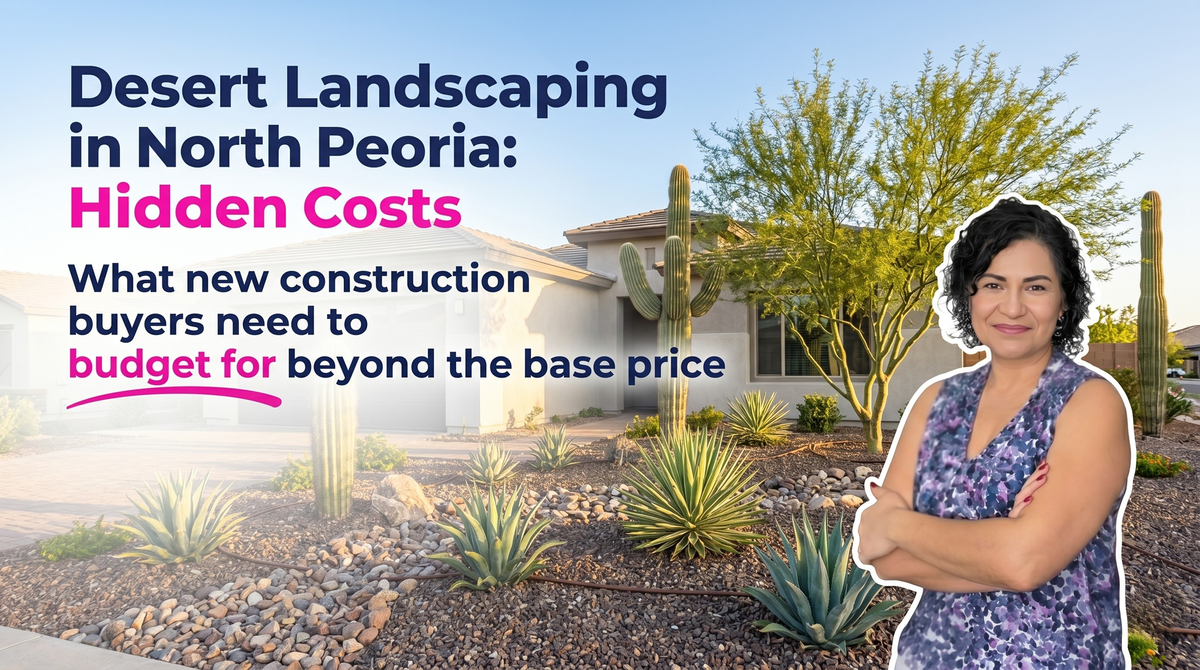
The real costs of desert landscaping in North Peoria are not the rocks and cacti themselves — those are often less expensive long-term than grass. The hidden costs are the rules around what you must install, when you must install it by, how often you must replace dead plants, and how HOA approvals can slow down simple changes. Budget roughly $3,000-$8,000+ for initial landscaping beyond what the builder includes, plan for ongoing replacement of plants that do not survive the first two summers, and expect HOA architectural review for any significant change you want to make later.
You are considering new construction in North Peoria — maybe Vistancia, Blackstone, Northpointe, or one of the newer communities off Lake Pleasant Parkway — and the builder hands you a landscaping "standard" that looks pretty. What you may not realize is that the landscaping standard is the beginning of a financial relationship with your HOA that will outlast every other feature of the home. Let me walk you through what is actually in that fine print.
What "Desert Landscaping Mandate" Actually Means
In most North Peoria master-planned communities, your home comes with a front-yard landscaping package installed by the builder, and the back yard is yours to complete — often within a specified timeframe after closing. The HOA's Covenants, Conditions, and Restrictions (CC&Rs) typically dictate a low-water, desert-adapted plant palette, minimum percentages of plant coverage vs. open rock or gravel, approved materials for hardscaping and borders, and rules about turf (often limited, sometimes prohibited, sometimes allowed only in specific locations). The City of Peoria has its own water-conservation programs, including a xeriscape rebate offering up to $3,000 for converting turf to desert-adapted landscaping — which tells you something about the city's overall direction on water use.
Why the emphasis on desert landscaping? Arizona has been navigating serious long-term water constraints. The Arizona Department of Water Resources' Fifth Management Plan, which took effect in January 2025, reduced the water allotment available for landscape irrigation statewide. Municipalities, HOAs, and homeowners are all operating under tighter water budgets than they used to be. Desert landscaping is not just an aesthetic choice anymore — it is increasingly a legal and utility-driven requirement. For more on how water-sensitive design affects West Valley home values broadly, the City of Peoria's water conservation resources at peoriaaz.gov are an authoritative starting point.
The Visible Costs You Will Budget For
These are the costs most buyers know to expect. Front yard landscaping is typically included in the builder's base price — although "included" varies significantly by builder, and some builders charge additional for specific trees, upgraded plant palettes, or premium materials. Back yard landscaping is almost never included. You will need to install the back yard yourself, often within a defined period (commonly 6-12 months after closing, per HOA rules). Typical all-in cost for a basic desert-landscaped North Peoria back yard ranges widely, but plan for a substantial investment — the range for a modest yard often runs into the thousands, and larger or more premium designs can run well into five figures. Irrigation systems, timers, permits where required, and the plants themselves all stack up faster than buyers expect.
The Hidden Costs Most Buyers Miss
This is usually where I slow buyers down. The costs that do not show up in any builder brochure or sales office conversation are the ones that bite you most. First: plant mortality. North Peoria summers are brutal. Even well-selected desert-adapted plants sometimes fail in their first summer, especially if your irrigation is not calibrated correctly. HOA rules typically require you to replace dead plants within a specific timeframe (often 30-60 days), at your cost. For a new buyer installing landscaping in late fall or spring, the first July-August cycle is when the real replacement expense hits.
Second: HOA architectural approval for changes. Want to swap a plant species? Add a tree? Install a larger patio? Change the rock color or size? Most North Peoria HOAs require a written architectural review request, a site plan, approved materials, and sometimes a fee. The review process can take weeks. Approvals are not automatic. Denials happen. For buyers coming from states with looser HOA cultures, this can feel surprising.
Third: irrigation system maintenance and water costs. A desert landscape uses dramatically less water than turf — but "less" is not "none." Drip systems need regular maintenance, emitters clog, lines crack, timers fail. Water bills in a new desert-landscaped yard typically run lower than turf, but not zero. Plan for ongoing irrigation service, system adjustments seasonally, and occasional repairs.
Fourth: turf restrictions that shift over time. Some HOAs permit limited turf in back yards today but are reducing or eliminating allowed turf areas in response to water management plans. If you are planning to install or maintain grass specifically, check both the current CC&Rs and any recent amendments or pending amendments — these rules can change. For a broader look at the kind of HOA due diligence buyers should do before removing inspection contingencies, this deep dive on Peoria HOA documents to review is essential homework.
— ReyAna K, Peoria, AZ
The Arizona Water Picture — Why Rules Are Tightening
Understanding the broader water context helps you budget realistically for the long term. Arizona's Groundwater Management Act of 1980 was foundational, but the current Fifth Management Plan (effective January 2025) imposed significant reductions in water allotted for landscape irrigation. HOAs in Maricopa County in particular are being pushed toward stricter plant density rules and turf restrictions. Some legal experts anticipate further tightening in future management plan cycles.
For a new North Peoria homeowner, this means three things. First: the rules you buy into today may get stricter later. A community that permits some turf today may restrict it in five years. Second: violating water-restriction rules can result in meaningful HOA fines. Third: there are trade-offs — Nevada banned turf outright with grant funding to ease the transition, while Arizona has taken a more phased, incentive-based approach, including Peoria's up-to-$3,000 xeriscape conversion rebate. Buyers who align early with desert-adapted landscaping often position themselves to avoid forced retrofits later.
What to Ask Before You Sign the Builder Contract
What I watch for here is whether buyers understand exactly what the builder is including vs. what they are responsible for. Specific questions to ask the builder's sales rep — and to verify in writing in your contract — include what specific plants, trees, and hardscape elements are included in the base price front yard package; whether any back yard landscaping (irrigation stubs, basic rock, trees) is included; the HOA's required back yard completion timeline after closing; whether a back yard landscaping deposit or bond is required; and what the HOA's architectural review process looks like for future changes. For a deeper look at the contract protections that matter when buying new construction, this guide on what should go into your North Peoria new construction purchase contract walks through the mechanics.
— Jessica Y, Peoria, AZ
How to Plan Smart for Landscaping Costs
At this stage, I help clients narrow their focus to a realistic total landscaping budget layered onto the home purchase. Practical planning tips: request the community's CC&Rs and any recent architectural guideline amendments before writing your offer — not after removing contingencies. Get landscape quotes from two or three licensed Arizona landscapers based on the community's specific requirements before closing, so you can budget accurately. Ask about City of Peoria rebate programs that may offset costs for certain plant palettes or irrigation upgrades. Plan for a 10-15% plant replacement reserve in your first two summers. Build a small annual reserve for HOA architectural review fees and minor irrigation system maintenance.
A home that is beautifully landscaped on day one but has no reserve for plant replacement often looks worse 18 months later than a more modest installation paired with a maintenance plan. Quality of ongoing care matters more than initial installation cost in the long run.
Frequently Asked Questions
Does my builder include back yard landscaping in North Peoria? Usually no. Most North Peoria builders include front-yard landscaping and leave the back yard to the homeowner, subject to HOA-required completion timelines.
How long do I have to install back yard landscaping after closing? Completion timelines vary by HOA, commonly ranging from 6 to 12 months after closing. Check your community's CC&Rs for the specific requirement.
Are there rebates available for desert landscaping in Peoria? Yes. The City of Peoria offers a grass-to-xeriscape conversion rebate up to $3,000 for Peoria water utility customers who meet program requirements. Details are available at peoriaaz.gov.
What happens if a plant dies and I do not replace it? Most HOAs have rules requiring replacement of dead plants within a specific timeframe. Violations can result in architectural compliance notices and potential fines.
Can I have grass in my North Peoria back yard? It depends on the specific community. Some allow limited turf, some restrict it, and some prohibit it outright. Rules may tighten over time in response to Arizona water management plans. Always check current CC&Rs and any pending amendments.
The Bottom Line
Desert landscaping rules in North Peoria are not designed to trap buyers — they reflect Arizona's genuine water constraints and a community design philosophy that protects property values long-term. But the costs are real, and many of them are not visible from the builder's sales office. Buyers who plan for the full landscape cost — front-yard upgrades, back-yard installation, plant replacement reserve, ongoing irrigation maintenance, and future HOA-approved changes — make smarter purchase decisions than buyers who focus only on the home's base price. Ask the right questions before you sign. Budget realistically. Align your plant choices with the direction the state is moving. Your future self and your future HOA board will both thank you.
Kasandra Chavez is a real estate advisor serving the West Valley of Greater Phoenix, Arizona, and has been recognized among the top 5% of real estate professionals in the Greater Phoenix area. She helps buyers and sellers align strategy with lifestyle and goals, providing clear decision-making support through the home-buying process. Her focus is on managing hidden costs, HOA review, and long-term ownership considerations so buyers can navigate new construction with confidence.