Buying in Ascent vs. a Newer Enclave at Northpointe at Vistancia
Nearly sold-out enclaves like Ascent and brand-new sections at Northpointe at Vistancia carry different risks. Here's the honest trade-off on both sides.
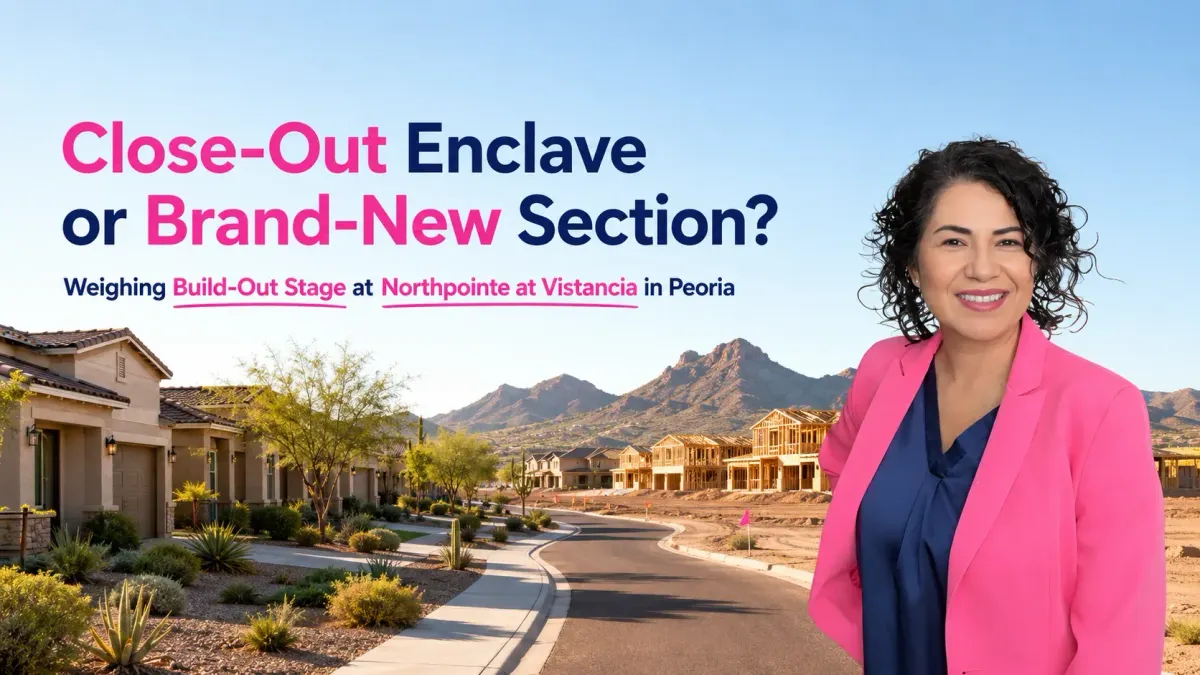
As CastleRock and other builders open new sections in Northpointe at Vistancia, is there any downside to buying in a smaller, nearly sold-out enclave like Ascent vs a newer enclave that will be under construction longer?
Yes—on both sides, and they're different downsides. A close-out enclave like Ascent gives you a finished streetscape and a fast move-in, but you choose from leftover inventory, the builder's on-site team eventually leaves, and your future resale will compete against brand-new homes opening nearby. A newer enclave gives you lot choice and the newest product, but you'll live with construction activity for years. The right answer depends on your timeline, your tolerance for build-out, and how long you plan to own.
This is one of the smartest questions a Northpointe buyer can ask, because it gets past the model homes and into how the community will actually function around you. Northpointe at Vistancia opened in 2021 and is planned for roughly 3,200 single-family homes at completion—which means even its most established enclaves sit inside a master plan that is still early in its story. Land in the community's northeast region has already been sold to incoming builders, with hundreds of additional homesites planned, and existing builders continue opening new neighborhoods. So the real comparison isn't "finished community vs. construction zone." It's "which stage of the build-out do I want to live through, and from which seat?" Buyers who think about it that way make calmer decisions—and negotiate better. Here's how I break it down.
What "Nearly Sold Out" Means Inside a Master Plan That's Still Growing
Start by separating the enclave from the community. Ascent, one of David Weekley's earlier Northpointe neighborhoods, is down to its final opportunities—but Ascent is one neighborhood inside a 3,450-acre community that will keep adding homes for years. Per the community's own development announcements, land sales totaling over 450 acres set up future Northpointe sections: CastleRock Communities acquired roughly 230 acres in the far northeast region with several hundred homesites planned, and Richmond American purchased additional homesites as well. What that means practically: buying in a close-out enclave does not buy you out of community-wide construction. Grading equipment, framing crews, and lot deliveries will be part of Northpointe's broader landscape regardless of which street you live on. What a close-out enclave does buy you is distance from it—your own street, landscaping, and neighbors are essentially complete, and the active work happens in other sections rather than next door. That distinction—your immediate enclave versus the master plan around it—is the foundation for everything else in this decision.
The Advantages of Buying Into Ascent's Close-Out
A nearly sold-out enclave has real, underrated strengths. First, certainty: the homes that remain are quick move-ins or move-in-ready, so you can typically close in 30 to 60 days with no design-center decisions, no build delays, and no guessing what the street will look like—you can stand on it. Second, a settled neighborhood: your neighbors have largely arrived, the HOA's character and enforcement patterns are observable rather than theoretical, and the common-area landscaping is grown in. Third, motivated pricing: builders closing out a neighborhood want those last homes off the books, which commonly translates into incentives, included upgrades, and more flexibility than you'd see at a just-opened section with a waiting list. And fourth, you skip the upgrade creep that pushes to-be-built budgets past their base price—what you tour is what you pay for. For relocating buyers and anyone on a lease deadline, this combination is hard to beat. The discipline point: treat a quick move-in like any other new home and inspect it independently before closing—here's the final walkthrough checklist for new construction I use, and it applies street-for-street at Northpointe.
— Paul, Surprise, AZ
The Downsides of Close-Out That Sales Offices Don't Volunteer
Now the honest part of the answer. Downside one: selection. The best lots in any enclave—the view premiums, the deep backyards, the no-neighbor-behind positions—sold first, sometimes years ago. What remains in a close-out is real inventory, but it's the inventory other buyers passed on, and you should evaluate each remaining homesite on its own merits rather than on the neighborhood's reputation. Downside two: the builder leaves. Once an enclave sells out, the sales office closes and on-site construction staff move on. Your warranty doesn't disappear—new homes carry written warranties regardless—but warranty service shifts to a regional customer-care process rather than a superintendent down the street, so document everything at your walkthrough and submit punch-list items promptly while the local team is still present. Downside three is the one I find most buyers haven't considered: future resale competition. When you eventually sell, your "nearly new" resale may be marketed against genuinely new homes in Northpointe's later sections—built by CastleRock and others, with fresh incentives and current designs. In master-planned communities, resales compete with the builder down the road. That's not a reason to avoid Ascent; established enclaves with mature landscaping and premium positioning hold their own. But it argues for buying a lot and floor plan with durable appeal, not just whatever's left. This is usually where I slow buyers down: a discounted leftover homesite is only a deal if you'd have shortlisted that lot anyway.
What Living Through a Newer Enclave's Build-Out Actually Looks Like
Choose a newer section—whether from one of the four established Northpointe builders or an incoming builder's first neighborhoods—and the trade reverses. You get first pick of lots, full floor plan selection, design personalization, and the newest product designed for current buyer preferences. Incoming builders also tend to price their opening phases to establish momentum, which can work in your favor. What you accept in exchange: a build timeline that commonly runs six to twelve months, followed by years—not months—of living near active construction as the enclave and its surroundings fill in. That means construction traffic on collector roads, dust during grading seasons, early-morning crew activity, and a streetscape that looks like a job site before it looks like a neighborhood. Road infrastructure evolves too; the City of Peoria's development and engineering project list includes ongoing roadway work in the Vistancia and Lake Pleasant Parkway corridors that accompanies this growth. None of this is a defect—it's what buying early in a section means—but your tolerance for it should be a deliberate input, not a surprise. What I watch for here is household fit: a family gone at work and school all day barely notices build-out; a remote worker or retiree home at 6:30 a.m. notices every concrete pour. Before committing either direction, review the contract protections that matter for North Peoria new construction, because newer-enclave contracts carry the longer timelines where those protections earn their keep.
How to Make the Call for Your Situation
Run the decision through three filters, in order. Timeline first: if you need keys inside 90 days, close-out inventory is your realistic lane, and the question becomes which remaining homesite is genuinely worth owning. Ownership horizon second: if you expect to resell within a handful of years, weigh the new-construction competition you'll face either way, and favor lots and plans with features new sections can't replicate—established landscaping, settled streets, premium positioning. If you're holding ten-plus years, the build-out era is a chapter, not the book, and a newer enclave's lot selection may matter more. Tolerance third: be honest about how much construction adjacency your household will accept, and for how long. Whichever direction you land, the diligence is the same: independent inspections, a careful walkthrough, and a full read of the governing documents—my guides to inspections, HOA reviews, and new-build walkthroughs in Peoria and the HOA documents to review before removing your contingency walk through both. At this stage, I help clients narrow their focus to the two or three specific homesites—across enclaves—that fit all three filters, and then we negotiate from strength rather than urgency.
— Jessica Y, Peoria, AZ
Frequently Asked Questions
Is Ascent at Northpointe at Vistancia sold out?
Ascent is in its final-opportunity stage, with a limited number of move-in-ready and quick move-in homes remaining from David Weekley. Availability changes week to week at this stage, so confirm current inventory directly before planning a tour.
Which new builders are coming to Northpointe at Vistancia?
CastleRock Communities acquired roughly 230 acres in Northpointe's far northeast region with several hundred homesites planned, and Richmond American also purchased additional homesites. Timing of individual neighborhood openings is set by each builder and the community's land-delivery schedule.
Will construction at new Northpointe sections affect existing neighborhoods like Ascent?
Active construction concentrates in the sections being built, so finished enclaves mostly experience it as truck traffic on collector roads and ongoing work in the broader community rather than next-door activity. Northpointe is planned for roughly 3,200 homes, so community-wide build-out will continue for years.
Do I lose my warranty if the builder finishes and leaves my enclave?
No. New-home warranties are written obligations that survive the sales office closing. Service simply shifts from on-site staff to the builder's regional warranty process, which is why documenting walkthrough items thoroughly and submitting requests promptly matters.
Are close-out homes at Northpointe negotiable?
Builders closing out a neighborhood are generally motivated to move final inventory, which often shows up as incentives, included upgrades, or pricing flexibility. Every situation differs, so treat each remaining home as its own negotiation rather than assuming a discount.
The Bottom Line
There's no free lunch on either side of this decision—just different costs paid at different times. Ascent-style close-outs charge you in selection and future new-build competition while paying you in certainty, speed, and a finished street. Newer enclaves charge you in years of construction adjacency while paying you in lot choice and the newest product. The buyers who regret their choice are almost always the ones who picked based on a model home rather than their own timeline, ownership horizon, and tolerance for build-out. Get those three honest answers on paper first, and the right enclave at Northpointe tends to identify itself.
About the Author
Kasandra Chavez is a real estate advisor serving the West Valley of Greater Phoenix, Arizona, recognized among the top 5% of real estate professionals in the Greater Phoenix area. She works with buyers and sellers to build strategy around their lifestyle and goals, providing clear decision-making support at every stage. Her approach centers on process control and steady market navigation, so clients always know what comes next.
Kasandra Chavez | Chavez Dream Home Team | chavezdreamhometeam.com